119 Birds that Connect Us
About this episode
Sometimes it’s not the bird you remember - it’s the moment you shared. Nature guide Amanda Lamont and a group of birdwatchers reflect on a weekend of birdwatching in Broken Hill, and how birds connect us to place, people and ourselves.
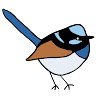
Birds featured: Australian Pelican, Chirping Wedgebill, Pink Cockatoo, Red-tailed Black-Cockatoo, Spiny-cheeked Honeyeater, White-winged Fairywren
Places featured: Broken Hill (NSW), Mungo National Park (NSW), Menindee Lakes (NSW)
Episode illustration: Pink Cockatoo
Resources
Echidna Walkabout Nature Tours by Australian Geographic Travel website
Pink Cockatoo recording by Marc Anderson - licenced from wildambience.com
Meet the guests

Amanda Lamont is a nature guide who helps people reconnect with nature. An experienced environmental advocate, Amanda Lamont has also served as a Climate and Disaster Adviser and founded Nature Based Resilience to champion integrating environmental advocacy into disaster planning.
This episode also features the voices of Alex, Peter, Kate, Delwyn and Catherine from the Broken Hill Meet-up.
-
Kirsty Costa [00:00:00]
This episode was recorded on the Country of the Wotjobaluk Peoples of northwest Victoria. Their Country encompasses lakes, rivers, swamps and other landscapes that hold deep cultural significance and are essential to Wotjobaluk creation stories and ancestral connections. I’d like to pay my respects to Elders past and present, and to their families.Kirsty Costa [00:00:38]
This is Season 4 of the Weekend Birder podcast and I’m your bird-loving buddy, Kirsty Costa. If you’ve been on break with me, it’s wonderful to catch up with you again. And if you’ve been listening back through the library, I’m so glad to be bringing you a new episode. I really value the break between seasons because it gives me time to step away from the computer and get back outside into nature. One of the places I visited was Broken Hill for a Weekend Birder meet-up. It was my first time there and it left a deep impression on my heart. I got to spend time with some amazing people who you’ll hear from later, and reconnect with nature. My wingman on this trip was my friend Amanda Lamont.Amanda Lamont [00:01:29]
I reckon I had three awakenings. The first was as a child. My dad was working as a ranger and he would bring various wildlife home that needed caring for, and that included birds. At one time I got a galah to look after - I called it Pinky. That was really special for me, being able to look after animals, get up for midnight feeds, and then see them return to the wild. The second awakening was when I lived in London. I was away for three years without coming back to Australia. When I returned, I was walking on the Central Coast in New South Wales and the sound of the birds took my breath away. I realised I hadn’t heard birdsong for three years. I had a little video camera and I was filming the sound because I wanted to take it back with me. I had a completely new appreciation for Australian birds and their voices. The third awakening was when I moved to the Dandenong Ranges on the outskirts of Melbourne. The first thing I noticed was the sound of the birds. I started getting to know them - the rosellas, the Wedge-tailed Eagles, the pardalotes and the fairywrens. They’ve been tapping on my heart at different stages of my life, saying get to know us.Kirsty Costa [00:03:31]
Amanda is a nature guide, and when she talks about her work you can hear her deep passion for the natural world. I’ve also seen her in action, and she has an incredible knack for helping people connect with the environment around them.Amanda Lamont [00:03:51]
I can’t believe I get paid to do this. I get to spend time in open spaces and beautiful places, surrounded by the sights and sounds and smells of the environment and wildlife and birds. And I get to do it with curious, inspiring people who are strangers at the start. Over six days, we build this intense connection with each other and the environment. We experience everything together - seeing a bird for the first time, standing on a ridgeline watching a full moon rise, or even witnessing drought and loss. We go through all of that together. By the end, it feels like we’ve known each other for years. I honestly don’t want to let people go. Being a guide means sharing so much - our hopes, concerns, knowledge and experiences. I really love it.Kirsty Costa [00:05:45]
Amanda also brings a strong focus on ethics and citizen science into her work.Amanda Lamont [00:06:00]
I’m a nature guide with Echidna Walkabout Tours and Australian Geographic. It’s really important to tread lightly on Country and to be part of the environment, not separate from it. We want people to enjoy nature but also help it. My hope is that people take that mindset back into their everyday lives and become ambassadors in their own communities. That philosophy is part of everything we do when we’re out together.Kirsty Costa [00:07:19]
Amanda is also known for her work in Mungo National Park.Amanda Lamont [00:07:31]
Mungo is a space more than a place. You don’t go there to do something, you go there to be. It’s about 100km north-east of Mildura in New South Wales and is one of the most culturally significant places in Australia, where Mungo Man and Mungo Woman were found. It changed what we understand about continuous connection to Country. It’s overwhelming to see and to feel. Every time I go, I get this sense of excitement and connection. I love sharing that with people. The landscape is dry lake beds now, full of saltbush and bluebush, kangaroos and emus, and incredible birdlife.Amanda Lamont [00:10:40]
The Spiny-cheeked Honeyeater sings a song there - and only there. When I hear it, I know I’m at Mungo. And then there are the Pink Cockatoos. Sometimes you get a glimpse, sometimes a whole flock. Seeing them against the red dirt and blue sky is just unforgettable.Kirsty Costa [00:12:34]
Seeing Pink Cockatoos on this trip was one of the most powerful moments for me. They’re medium-sized cockatoos with soft white feathers flushed with pink, and a crest that fans open like a sunrise. They rely on old tree hollows that can take more than a century to form. You might know them by their former name, Major Mitchell’s Cockatoo. BirdLife Australia reverted to Pink Cockatoo due to the history associated with that name.Amanda Lamont [00:14:11]
It was my first birding meet-up and I loved it. Being with people who are curious and generous with their knowledge, asking questions and supporting each other - it was such a great experience. We shared moments together, then went off and saw different things, and came back to share again. It was fun. That’s the most important thing.Kirsty Costa [00:16:21]
We recorded reflections from the group so you could feel like you were there with us.Participant - Alex [00:16:21]
We stopped for Pink Cockatoos and then saw Red-tailed Black-Cockatoos. There were plants I hadn’t seen before as well. It all came together - birds and plants - and I was buzzing.Participant - Peter [00:17:30]
As a new birder, almost everything was a lifer. It’s just been an awesome weekend.Participant - Kate [00:18:14]
We’ve learned so much from each other. It’s been really well organised and such a great experience.Participant - Catherine [00:18:30]
Seeing Pink Cockatoos and Red-tailed Black-Cockatoos, and then pelicans fishing together in synchrony at Menindee Lakes - that was really special.Amanda Lamont [00:21:14]
I’m now at Menindee Lakes on Barkandji Country, still on a high from the weekend. I can’t forget the Chirping Wedgebill. We heard it so many times before we finally saw it. It’s shy, but unforgettable.Kirsty Costa [00:23:47]
As the trip came to an end, Amanda reflected on one more awakening.Amanda Lamont [00:24:57]
Backyard chickens. I find myself wondering what they think when other birds take flight. That curiosity about what birds are experiencing is what keeps drawing me in.Kirsty Costa [00:25:39]
That curiosity is what this podcast is all about. Birds connect us - to place, to each other and to ourselves. I’ll speak to you again soon.