147 The Birding Movement
About this episode
At first, it just feels like a quiet hobby - then you realise how many people love it too. Natalie Kyriacou shares her insights into human relationships with nature and her new book Nature’s Last Dance.
Birds featured: Kākāpō
Episode illustration: Kākāpō
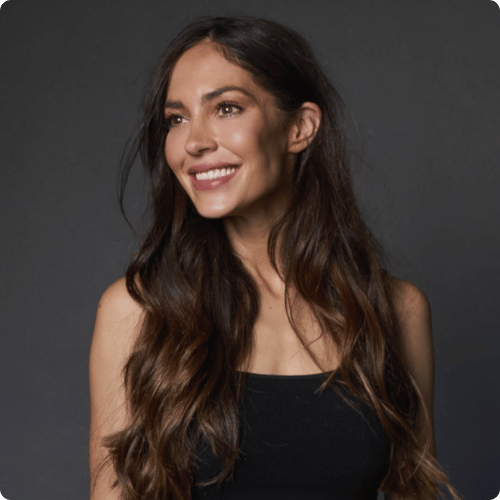
Natalie is an award-winning environmentalist, presenter, and charity director on a mission to spark curiosity about the natural world. She is the author of Nature’s Last Dance: Tales of Wonder in an Age of Extinction. Natalie was awarded the Medal of the Order of Australia and the Forbes 30 Under 30 Honour for her services to wildlife and environmental conservation in 2018. Natalie is the Founder and Chair of My Green World, a Board Director at Foundation for National Parks and Wildlife, a former Board Director at CARE Australia, a W20 Delegate (official G20 engagement group), a UNESCO Green Citizens Pathfinder. She sits on the XPRIZE Global Brain Trust for Biodiversity and Conservation. She is a National Ambassador for the Australian Conservation Foundation.
-
Kirsty Costa [00:00:00]
I'm coming to you today from the lands of the Bunurong Boon Wurrung people of south-east Melbourne. How about you, Natalie?Natalie Kyriacou [00:00:05]
I'm on the land of the Gadigal people of the Eora Nation. We pay our respects to Elders past and present, and to any First Nations person from around the world listening to this podcast.Kirsty Costa [00:00:34]
Welcome to Weekend Birder. I am Kirsty Costa and in this podcast we notice birds together.I'm thrilled to introduce you to a really special human. Natalie Kyriacou is an award-winning environmentalist, presenter and charity director who’s on a mission to spark curiosity about the natural world.
She was awarded the Medal of the Order of Australia and the Forbes 30 Under 30 honour for her services to wildlife and environmental conservation in 2018. She was a United Nations Environment Programme Young Champion of the Earth finalist. She was named one of The Australian’s 2022 Top Innovators, and in 2025 she was named a Marie Claire Woman of the Year nominee.
She is a force for good, for nature, and she’s here to talk about her love of birds and her brand new book.
Like all Weekend Birder guests, I'm curious to know - when did Natalie start to notice birds?
Natalie Kyriacou [00:01:53]
I think what happened was I never stopped noticing.That childlike sense of wonder that I had for nature never went away, and I was fortunate that my childhood was spent outdoors for the most part.
My parents took me camping every second weekend. On the weekends that we weren't camping, my dad would pitch a tent in the backyard and we would camp. My sister and I would camp with him, and he later told us it was actually so mum could have a break from us.
But I spent a huge amount of time outdoors and I loved frogs, I loved birds, I loved going on adventures, and I would pretend that I was on these grand forest adventures in my own backyard.
So I fell in love with nature, and as I grew up, I never fell out of love.
I was a sensitive little girl. I cared about the world. I cared about blades of grass, bird song, fish, and the characters that I would watch on TV or read about in books that might have been animals.
I just cared, and I felt for them all, and that didn’t go away.
Kirsty Costa [00:03:18]
Natalie has continued to grow her care for nature. Here's how she got to where she is now.Natalie Kyriacou [00:03:18]
I spent a lot of time getting rejected from every job that I ever applied for. And on one occasion, I was rejected from a job that I didn't even apply for.So I was faced with the troubling realisation that I was unfit for the labour market and might not have had any skills.
So I decided to do what every parent dreams their first-born child will do - become a full-time volunteer.
I decided to focus on the things I was really passionate about. I volunteered for a range of NGOs, and then I became a university student.
That meant that I was not only not getting paid to work, but I was also paying to learn.
In my mind, I didn’t think a traditional career was for me. At the time, that was not common or accepted.
I wanted a career where I focused on the things that I was passionate about. I wanted to change the world. I wanted to make the world a better place. I wanted to work in the environment or human rights or both, because they’re interconnected.
So when I was in my mid-20s, while I was still at university doing my master’s degree, I ended up starting my own initiative. It was a passion project - a mobile game app.
It ended up being the world’s first mobile game app that allowed young people to become virtual conservationists. They could donate to charities, build their own wild world, protect species, and compete in educational quizzes.
Each action they took in the app represented a real-life charity and a real-life scenario.
That passion project became quite popular and fundamentally changed my career. By the time I graduated, I ended up being the CEO of this charity focused on wildlife and environmental education for kids.
I was on a mission. I moved back home with my parents to fund it. I sold my car, put my life savings into it. Nothing else existed outside of this mission.
That was the start of my professional relationship with nature, where I embedded my love for the natural world into my career. I wasn’t willing to accept that I couldn’t have a career centred around nature.
Kirsty Costa [00:05:47]
I've just finished Natalie’s new book, Nature’s Last Dance - Tales of Wonder in an Age of Extinction.It’s a powerful exploration of wildlife conservation and what it means to be human in this changing world. It’s beautifully written, thought-provoking, and a real page-turner.
It charts humanity’s relationship with nature and how nature has shaped our lives, our economic systems, our political systems, and our healthcare systems.
But it’s told through a range of quirky, sometimes joyful, sometimes tragic, sometimes hilarious stories. That’s probably why it’s received so much media attention - the stories read like fiction, but they are all true, heavily researched and referenced.
Natalie Kyriacou [00:07:59]
The birding chapter started off as quite a quirky chapter.I was tracing a controversy in the birding community, and what’s really funny is that we don’t realise how odd we are.
We love birds so much that we get into these niche areas that seem incomprehensible to others, but to us it’s completely normal.
I wanted to take an outsider’s lens to the birding community to showcase the eccentricities, the love, the joy, and the impact of birdwatching.
It’s one of the most impactful chapters because I don’t think people realise how unique it is to have this global movement of people from all backgrounds, all over the world, united by something as simple as a love for birds.
There are hundreds of millions of us.
And behind that movement is a powerful conservation effort. It’s changing economies. It’s creating better ecological data. It’s all because people fell in love with birds.
And it’s also about people stepping outside, looking away from their phones, and paying attention.
That, in this age, is quite revolutionary.
Kirsty Costa [00:10:35]
Birders are such a source of joy for me.Natalie Kyriacou [00:10:38]
I love this framing so much. I’d never thought about birdwatchers as a global movement for good - but we are.We power economies, we create community, and we connect people to the living world.
Kirsty Costa [00:11:17]
I feel a deep pride in being part of this movement.Natalie Kyriacou [00:11:17]
Writing this chapter made me reflect on my identity.I don’t necessarily consider myself a birder - more of a hobbyist - but I find so much joy in watching birds.
And I’ve never come across a community quite like the birding community.
Kirsty Costa [00:13:05]
Natalie called her book Nature’s Last Dance, but don’t let that title fool you.Natalie Kyriacou [00:13:21]
We hear so many stories of destruction, but I’ve been exposed to countless stories of people doing extraordinary things for nature.Stories of hope, action, and joy.
Most people care. Most people are good.
And if birders can unite around one shared love, maybe the rest of the world can too.
Kirsty Costa [00:18:00]
Natalie’s bucket list bird is the Kākāpō.Natalie Kyriacou [00:18:00]
I really want to meet the Kākāpō, the world’s heaviest parrot. They don’t fly, they’re incredibly rare, and they’ve had a big breeding season recently.Kirsty Costa [00:18:34]
At first glance, you might mistake this New Zealand bird for a moss-covered bowling ball.It’s flightless, heavy, and full of character.
Kirsty Costa [00:19:33]
Natalie has reminded me about the power of noticing birds and why I love being part of this community.Go grab her book Nature’s Last Dance at your local bookshop or library.
We’ve got four more episodes left this season, including a special Ask Us Anything episode.
Thanks so much for listening, and I’ll speak to you again soon.