148 The Nature School
About this episode
At this school, it’s completely normal to stop class for a bird. Catherine Shaw shares how The Nature School helps young connect with the world around them.
Birds featured: Bar-tailed Godwit, Brolga, Buff-breasted Paradise-Kingfisher, Glossy Black-Cockatoo, Golden Whistler, Lewin’s Honeyeater, Regent Honeyeater, Square-tailed Kite
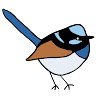
Episode illustration: Golden Whistler (male)
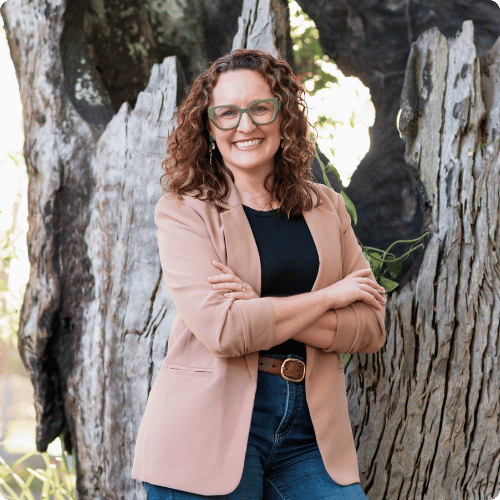
Catherine Shaw is the founding Head of The Nature School. She is a three-time finalist at the Australian Education Awards, including being a finalist for Principal of the Year in 2025. Catherine has also received a National Award for Services to Outdoor Education Australia and been recognised as the most Outstanding Business Leader in the Port Macquarie Region several times. Passionate about Australian wildlife and habitats, Catherine believes education about our unique endemic species is key to their protection and survival. When she isn't writing about teaching or teaching about writing, she is probably out chasing birds with her camera and photographer husband.
-
Catherine Shaw [00:00:00]
I'd love to start by sharing the acknowledgement of Country that students from The Nature School and staff have co-written. Our school is on beautiful Birpai Country in Port Macquarie on the mid-north coast of New South Wales, and we share our acknowledgement like this: We, the future generation, acknowledge and honour the Birpai Nation, the traditional custodians of this land. From rainforest to ocean and warm golden sand. We respect all Elders past, present, emerging, from mountains to lakes and rivers surging. We respect all creatures, land, sea, sky, all that crawl and swim and fly. We respect all plants that grow to the sun, from tiny shoot to elder gum. We, the future generation, acknowledge and honour the Birpai Nation.Kirsty Costa [00:01:07]
Welcome to Weekend Birder. I'm Kirsty Costa, and here together we notice birds. Imagine a school where students learn through wetlands, forests, mud, risk, curiosity and adventure. Well, listener friend, this school exists. It's called The Nature School, and birds are a huge part of student life there. The Nature School’s principal is Catherine Shaw, and she's our guest today. My first question for Catherine is one that I love to ask all my guests - how did you grow your interest in birds?Catherine Shaw [00:01:41]
I'm really glad that my answer is I became interested in birds as a child, because obviously now I'm a school principal and I work a lot with helping children connect with the natural world. So for me, it's significant that it started in childhood. I think it started just camping with my family. My mum was an artist and I can remember her setting up paints and watercolour paper by the side of a stream, and my dad was probably bored, but he had an old set of binoculars and an old copy of What Bird Is That? And I probably felt more comfortable looking at the birds with my dad than picking up a paintbrush with my mum. So I'd start looking through dad's binoculars. And as a child I was always looking for the colourful ones. I remember the front cover of that edition had a Buff-breasted Paradise-Kingfisher on the front, and it was only a year or two ago that I first saw that bird for the first time, and it took me right back to being a child and dreaming about all the colourful birds that I could possibly see through my dad's binoculars.Kirsty Costa [00:02:38]
The Nature School is in Port Macquarie in New South Wales, which is on the east coast of Australia.Catherine Shaw [00:02:43]
It's the most amazing school in Australia - and I realise I'm entirely biased in saying that because I am the principal - but it's so cool to have a school that allows children to really connect with the natural world and spend a whole lot of their childhood outside. We're a kindergarten to year ten school, we cater for about 200 students, and we teach the same curriculum as every other school in New South Wales. So we're not doing anything radically different with what we're teaching, but we do radically different things in how we're doing that teaching. I say to teachers, "Teach inside if you have to." A lot of the time they're teaching outside. We have base mats set up under the trees for a maths lesson or an English lesson. And a lot of the time we're not even onsite at school. We have three Nature School branded minibuses, and every day of the week is somebody's adventure day. The teachers have their light rigid licence to drive the buses, and so on any given day of the week I have a class jumping in the magic school bus with their teacher to go and have their full day of regular learning offsite in Port Macquarie. They might be learning on the beach, or learning in the bush, or learning at the community gardens. The whole of the Port Macquarie region is our classroom, and so our students have this really exciting nature-based experiential approach to their learning.Kirsty Costa [00:04:05]
As a former primary teacher from an inner-city school in Melbourne, I'm trying to picture what a day at The Nature School actually looks like. For example, do students work on computers like other schools?Catherine Shaw [00:04:16]
We're low-tech, but we're not no-tech. I don't think we need to have interactive digital screens in kindergarten classrooms, but we do need kindy kids who can work an iPad, and they need to be able to use those digital devices purposefully, not just in game-based ways. We do have MacBooks for all of our students - we're a Mac school - but they don't need to have an email address when they're in year four. They need that when they're in high school. So we step up their exposure to technology through the years. Our kids are great digital natives actually. We've got students who use their iPads for citizen science. They know how to snap a photo and upload that to iNaturalist to identify an insect we didn't know. Every student in our school knows how to contribute to the Aussie Bird Count. Our high schoolers do write essays like every other high school student. While they're sitting under the trees they might not be writing the essay right then, but they could be gathering the geographical or scientific data they need in order to write it. And they write a more meaningful essay because of the firsthand experiences they've had out there, rather than writing about something they have no knowledge of.Kirsty Costa [00:05:32]
I am loving the sound of this school already. And if learning under trees wasn't enough to convince me, Catherine says that birds are an important part of student life at The Nature School.Catherine Shaw [00:05:42]
One way is actually written into our teaching programs, and that might not just be a science lesson. It could be in English or mathematics. A good example might be our year three students looking at Jeannie Baker's beautiful picture books. I think every child in Australia at some point has read Where the Forest Meets the Sea, but they've also been looking at books like Circle, which features a Bar-tailed Godwit and its journey from Alaska all the way down to Australia. So when year three are on their adventure days, they're looking for Bar-tailed Godwits, which they know about from the book. Their maths lesson on the adventure day is looking at the different lengths and shapes of shorebirds and how that beak is designed to reach the prey items and shellfish available in the wetlands and estuary areas around Port Macquarie. Suddenly we've got a really engaging mathematics lesson that's actually about birds at the same time. Or our year six students are studying nocturnal species this term, and they'll do a novel study on Guardians of Ga’Hoole, where all the characters are owls. They'll be looking at hollows and the requirements for nocturnal species to have hollow-bearing trees, and also looking at the impact of rodenticides and the devastating impacts of that. In secondary school, my photography students might be doing wildlife photography, and of course there'll be a bit of bird photography thrown in there. So that's an example of how it ties into teaching and learning.But then there are all these other ways that birds are part of our school life too. I'm a member of our local birding club, and we've set up this beautiful partnership between the Hastings Birders and The Nature School, where the school is a member of the local birding club. That means all our students can be junior members. Four times a year they put on a junior birding morning. Some of the seniors from the club turn up, a bunch of students from the school turn up with their families, and we all just go birding together. It's the most authentic, genuine intergenerational program I've ever seen, and I'm never quite sure whether the students or the seniors get the most out of those mornings.
Even in our everyday life, at the moment at the front of the school there are signs on how to identify a Regent Honeyeater because one was just seen in our area, and I want students to be able to identify that bird if they happen to come across it on their adventure days.
National Bird Week is held every October in Australia. This annual event celebrates local birdlife and raises awareness of bird conservation. It's also the week that BirdLife Australia runs the Aussie Bird Count. As a national birder principal, I give a bit of flavour to it. If you're at a school where the principal is really into rugby, you know there's going to be a good rugby team. If you happen to go to a school where the principal is a bird nerd, you're probably going to gear up for a spectacular Bird Week. So that's what it's like at The Nature School. It's the best week of the year. Everybody knows that's Kaz week. Just let her go.
I get to run all kinds of great things. The kids turn up and there are activities in the playground every day. You can draw birds, weave things, there are binoculars out, books to read, nests on display. It's just really cool.
Then we have our annual bird-calling competition that week, and it's a buzz at The Nature School. The kids know this is coming. They are practising hard for it. We have beginner level, intermediate level and advanced. I choose the species for beginner level, so it might be something really easy like a Bar-shouldered Dove. "Boop boop boop boop." I teach the younger primary kids how to do that sound, and every year they learn a new bird. The older students choose their own bird, so they'll get up for the competition and say, "My name's Catherine and I'm going to do the call of a Noisy Friarbird," and off they go. For extra points some of them will work out the scientific species name as well.
It's a proper competition. We have a professor from the local university, one of the seniors from the birding club, and my husband who's a bird and wildlife photographer all come in as judges. There are prizes, bird nerd pins, and we crown a bird-calling champion every year. We've had such cool calls. Kids doing Little Penguins, kids doing brolgas, kids doing whistling calls I would never imagine children would attempt. But it's the most fun.
Kirsty Costa [00:10:29]
And the bird-call champion of last year was Evie. Here is Evie's winning impersonation of a brolga call.That's a very impressive Evie. Congratulations.
Catherine has noticed that connecting to local birds has also increased her students’ sense of belonging to community and place.
Catherine Shaw [00:10:54]
There's significance in knowing who you are, where you live, and what happens in your area. I don't know that there's much value in me at The Nature School teaching children about cassowaries, for example. If my students were at the beautiful little rainforest school on Mission Beach, great - that would be a species they need to know about. But my students here, I want them to know the sound of a Glossy Black-Cockatoo because when they're on their adventure day they might hear one down in the bushland. Unless I've taught them that call to listen out for, they might notice it, but they won't recognise what it is. But we've done the Glossy Black-Cockatoo call in our bird-calling competition, and I know that when my kids are out in the bush they'll hear that sound and go, "Wait, I know that call. That's a special bird." We're noticing when that bird is in our area. Learning about species isn't just for our own growth - it's for the protection of the species that we share homes with. The Glossy Blacks in our area are a really good example of one that I'm teaching our students for the benefit of the birds, not just for the benefit of the students.Kirsty Costa [00:12:03]
That was the sound of a Glossy Black-Cockatoo. Many thanks to Marc Anderson at Wild Ambience, who continues to gift us his recordings. Spencer Hitchen is a young birdwatcher and photographer who has committed much of his life to the conservation of this species. Head back to episode 125 if you haven't heard that chat yet.If you would like to help the young people in your life tune in to the birds around them, Catherine suggests that bird calls are a great entry point.
Catherine Shaw [00:12:30]
There was a day when I was sitting here in the office and I could hear the alarm call of Noisy Miners and butcherbirds and Rainbow Lorikeets all at the same time. Anyone who's an experienced birder knows that when the alarm calls of multiple species go up, there's a problem - most likely a predator. So I go running out of my office and the kids say, "What's wrong?" And I said, "I heard the alarm calls of three different birds." Everyone stopped, and a goanna came slowly crawling through the garden. I went, "That's what they were telling us. Did anyone listen? Did you notice?" And now I often hear kids say, "Oh, that was an alarm call." Their eyes are up there looking - is there a bird of prey or a goanna around? They're actually learning to listen to what birds are saying to us.Kirsty Costa [00:13:15]
One of the joys of Catherine's job is experiencing birds alongside her students.Catherine Shaw [00:13:20]
It's really lovely taking children into the bush and seeing how they experience birds and what they notice, especially the way they describe birds. I can tell you that's a Lewin's Honeyeater, but it's more meaningful that a child says to me, "That's the pew pew bird. Pew pew pew pew." It's like a Star Wars bird. So now we call it the pew pew bird. Even in my birder head, instead of ripping out the scientific species name for that bird, I go, "That's the Lewin's Honeyeater, otherwise known as the pew pew bird."The way children notice birds actually makes a lot of sense. Sometimes as adults we overcomplicate things. Or they say the Pacific Baza has a mohawk. "That's the mohawk hawk." Great. Why didn't I think of calling a Pacific Baza the mohawk hawk?
I also love the joy that a child has the first time they experience a bird. I think we can lose that really quickly as adults. I still got that when I saw the Buff-breasted Paradise-Kingfisher, but I don't get it so much anymore when I see a Golden Whistler. But the first time you show a child a male Golden Whistler, it's like the coolest thing they have ever seen. They're like, "Has this been in my backyard the whole time and I didn't know this existed?" They just stop for a moment.
Wouldn't it be great if adults could reclaim a little bit more of that? Perhaps that's why birding is so contagious for adults - because we get to reclaim a little bit of that wow factor that naturally children have and adults tend to lose.
The day I was watching a PE lesson and the whole lesson stopped because a bird swooped down and a kid yelled, "Square-tailed Kite!" - and the ID was correct - I thought, my work is done.
Kirsty Costa [00:15:24]
If you're a teacher, parent or guardian looking to connect young people to birds through your school’s curriculum, here is some advice from Catherine.Catherine Shaw [00:15:32]
Can I say hello bird friends in other schools? Yes, you have permission to lean into that. Hear it from Kirsty and hear it from me on behalf of the children in your schools - yes, lean into that thing.Children need adults who are passionate about things. Kids need adults who are passionate about birds to help open that up to them.
I would say start with what you have at your school. One of the reasons I think birding has taken off so well is because birds come to us. It's cool to be a kid who's into snakes, but not many snakes rock up into your school grounds on a regular basis. Whereas birds fly into our schools all the time.
So start there. Most children in Australia actually can't tell you the difference between a magpie and a butcherbird. And if they can tell a magpie from a butcherbird, they probably can't tell you whether it's a Pied Butcherbird or a Grey Butcherbird. So start there. Start with noticing and naming what comes into your school grounds, then stretch out from there just a little bit.
If you do go on an excursion, talk about what you might see before you get there. We often make bingo charts here for the top ten species we're likely to see. It helps children make the connection between "I saw a thing" and "Yes, that was it."
I'll put my hand up and say if any teacher wants to email me through Kirsty, I will make a bingo chart for your school based on where you are. It's been a really simple and easy tool for us to use to connect children with birds in their local area.
And of course you can reach out to BirdLife Australia too. They've got their beautiful Birds in Schools program, and I'm sure they'd love to hear from schools wanting to connect through that program.
Kirsty Costa [00:17:24]
I've put a link to The Nature School’s website, Catherine’s Instagram account, and BirdLife Australia's Birds in Schools website in the show notes for this episode.Before Catherine heads off to her next class, she has some sage advice for all the bird lovers out there.
Catherine Shaw [00:17:42]
I often say to students here, embrace your inner geek. I don't think we need to be shy about it anymore.As a kid I loved birds, and then there was this period where it wasn't cool to be into birds, so I became a quiet birder. I noticed them, but I didn't do anything about it.
Having this role as principal of The Nature School has given me permission to be as nerdy as I like about birds, and I'm unapologetic about it. Kids around me benefit from that.
You only have to hang out and have a coffee with me for half an hour before I'll get you interested in birds. Before you know it, you'll be sending me messages going, "What's this?" or making a recording and saying, "I heard this on my morning walk. Are you the girl I can send that to?" I love that I get to open people's eyes to the world around them, and it benefits them and the birds.
Kirsty Costa [00:18:33]
Many thanks to Catherine for taking time out of her busy schedule to share her love of birds and education with us. Thanks as well to Joshua Davidson, a parent of a Nature School student who suggested Catherine as a guest for the show. I'm so glad he did.And many thanks to you, listener friend, for sticking with us through season four of the show. In a few episodes’ time, we're celebrating the end of the season with a special Ask Us Anything theme. I've got some fantastic guests joining me to answer your questions about birds, birdwatching and Weekend Birder.
Visit weekendbirder.com to record or type your question. We'll do our best to answer as many as we can.
Speak to you again soon.