About this episode
Australia's honeyeaters are noisy, feisty and full of surprises. Sean Dooley from BirdLife Australia explores what makes these birds so uniquely Australian, shares some remarkable stories about their lives and explains why the Aussie Bird Count matters.
Birds featured: Little Wattlebird, Red Wattlebird, Regent Honeyeater, Scarlet Honeyeater, Yellow Wattlebird
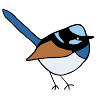
Episode illustration: Scarlet Honeyeater
Resources
Regent Honeyeater recording is by Ross Crates (XC660503) via xeno-canto.org
Scarlet Honeyeater and Yellow Wattlebird recordings are by Marc Anderson - licenced from wildambience.com
Meet the guest
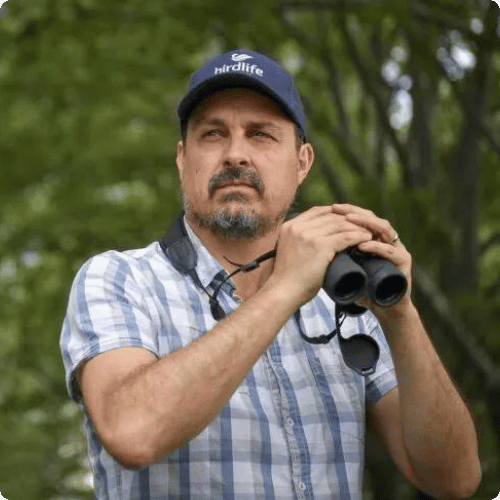
Sean Dooley is the National Public Affairs Manager for BirdLife Australia, author of The Big Twitch, and former holder of the Australian Big Year twitching record. For many years, Sean and his team have been working tirelessly to ensure that birds are protected and loved by Australians. That's why he is affectionately known as 'the Birdman' and we reckon he’s a national treasure.
-
Kirsty Costa [00:00:01]
I'd like to acknowledge that I'm in the country of the Bunurong Boon Wurrung people of south-east Melbourne, Naarm and pay my respects to elders, past and present. Whose country are you on today, Sean?
Sean Dooley [00:00:12]
I am on the same glorious bit of country as you, Kirsty, on Bunurong lands, which is a real privilege because there are still remnants of what the landscape was like before Europeans arrived, and I feel enormous connection to those people who came before. When I visit those spots and often spend a lot of time in my area thinking about what they must have seen before they were driven off this land, and how I know because I grew up on Wurundjeri Country, you know, it means an awful lot to me. But I often think about how much that connection to land means to them.
Kirsty Costa [00:01:13]
Welcome to Weekend Birder. I'm your birdwatching buddy. Kirsty Costa. If you are listening to this episode the week that it goes live. We're in the middle of BirdLife Australia's Aussie Bird Count. And if you're not listening during the Aussie Bird Count, you're still in for a treat because we are going to do a bit of a longer episode to get to know Australia's honeyeaters. Joining me is Sean Dooley from BirdLife Australia. He doesn't like me saying this, but I think he's a national treasure and he's also known as the Bird man. You might have heard Sean on multiple other Weekend Birder episodes. He's a regular here. We've heard about ravens and crows. We've heard about pigeons and doves. We've heard about the Aussie Bird Count before. And you also heard Sean come on the show at the end of season four to answer some of the questions that were coming in from the Weekend Birder community. It's great to have you back on the show. Sean, it's really good to see you.
Sean Dooley [00:02:03]
Thanks, Kirsty. I'm glad you're not sick of me yet.
Kirsty Costa [00:02:06]
Definitely not my friend. In fact, I think you're one of the most requested guests that continually get asked to come back on the show. So it's really great to see you and we're in the middle of the Aussie Bird Count week, which is something very special to me, and I'll share a bit more about that in a moment. But for people who haven't heard about this amazing citizen science program before, do you mind giving us a little bit of an intro?
Sean Dooley [00:02:29]
Yes, certainly. Yeah. The Aussie Bird Count is really close to my heart because I was, uh, I was one of the people that got it started working at BirdLife Australia. We had just come out of the merger between Birds Australia and BOCA, um, variously known as the Bird Observers Club or Bird Observation and Conservation Australia, as they were before the merger. And we were looking at, okay, we've got this new national organisation to advocate for birds. How do we how do we focus our campaigns, what's what's important to us and our supporters, and who are our supporters and who can who are we not reaching? So we did a. We did a lot of research. It's a science based organisation, but for the first time ever, really. We researched people and we did, uh, commissioned a lot of social research into what Australians attitudes to birds was. And we found there was unsurprising, I'm sure, for you, Kirsty. There is an enormous welling of deep affection and connection for Australian birds from our people. But when we looked at the extrapolated those numbers out, we were only reaching a fraction of people with our with our messaging, with our campaigns. And, you know, we we have this. I suppose I always joke that the you know, you remember the politicians used to talk about the quiet Australians, really birdwatchers, bird lovers are the true quiet Australians because you have to be quiet if you want to see the birds. But also, I think because birdwatching had this image of being a bit daggy, a bit nerdy, no one, you know, and I experienced this as a teenager. You didn't want to stick your hand up and saying, I'm a loud and proud birdwatcher. It was not cool. So people tended to keep it to themselves. And we looked into, okay, there's this mass of people like, we we found out through research that 400,000 Australians considered birds as one of the most important parts of their lives living in this country. And there was close to 4 million people who valued birds to a very high degree, having birds in their life. How do we reach those people? What's putting them off connecting with us? Um, is it the way we're communicating? What we realised was so many people who love birds, they might be people who feed birds in their backyard, or just who love the sound of their local birds. Or when they're on holidays. They would they would look at the birds. Most of them wouldn't have considered themselves experts are most of them thought there's a stereotype of a bird watcher, and I don't fit it. I'm not an ornithologist. I'm not a scientist. I don't wear khaki. I don't have a big, um, colonel blimp moustache. And so there was a sort of impediment that people felt like they couldn't contribute, or that they what they experienced wasn't valuable in a, in a broader, more formal scientific sense. So how do we address this? So we came up with this concept. I suggested, why don't we do a bird count, a backyard bird count. And amazingly, uh, the managers at BirdLife Australia said, “That’s great”. Let's let's get it happening. And so we started in 2014 and we this is a this is a citizen science event for non citizen science people. This is like an you know we call it the gateway drug to monitoring um to, to to bird monitoring. It's it involves downloading the Aussie Bird Count app, which we've made as user friendly as possible with lots of hints and tips on how to identify birds. Basically saying, we want you to tell us what you're seeing. You don't have to be an expert. You don't have to go to the best birdwatching spots. We want to know what birds you see every day, because they're the birds that often inspire us as birds are, more often than not, birds. We just see in the backyard or down the local park or something. So. So the bird, uh, the Aussie Bird Count was originally the Backyard Bird Count. We dropped that after a few years because people were asking, you know, oh, but I want to count birds elsewhere. And we never intended it just to be a backyard bird count. So. So now the Aussie Bird Count. And we've gone from we had 9000 participants in the first year, counting 800,000 birds across Australia. We thought that was awesome. Uh, but. Fast forward to 2025. We had 64,000 people, counting 5 million birds in 150,000 surveys. So that's 150,000 points of data that we have in the bank to compare year on year. And the great thing for us at BirdLife Australia, it provides an annual snapshot of how our bird populations in the places where people live are faring. And we've got that now in the database forever. So we can use that for comparison, for working out really one of the essential things of, of conservation, the the building block of conservation is monitoring because how do you know what you need to protect if you don't have that information, that data to show that things are in trouble. So this is very elemental, fundamental to bird conservation. But more than that, the Aussie Bird Count is about celebrating, celebrating, discovering the neighbours that you never realised you had. The incredibly beautiful, hilarious characters that inhabit our days living these these amazing soap operas right outside your window. And that's been the real joy of the Aussie Bird Count, is having all these people who would would never say they were bird watchers sharing these experiences with us and sharing it among each other and just delighting in these incredible creatures we have.
Kirsty Costa [00:08:29]
I love that the count started by recognising how many Australians already care about birds, even if they don't call themselves bird watchers. For me, the Aussie Bird Count is tied to a very particular memory. I've always loved birds and during Melbourne's first Covid lockdown in March 2020, I started to notice them much more deliberately. And by October I was so ready for the Aussie Bird Count. Interestingly, I grew up hearing Red Wattlebirds calling outside my window on Wurundjeri country and I know them so well. And then through the Aussie Bird Count, I discovered that some of the birds that I'd been seeing around my neighbourhood weren't young Red Wattlebirds at all. They were actually Little Wattlebirds, which is a completely different species of wattlebird. And all along they'd been living around me and I didn't even realize it. I remember that discovery, and I also remember how connected I felt in taking part in the Aussie Bird Count. While we were all physically apart during lockdown, there were thousands of people of us all around Australia doing that very small act of noticing and caring and recording our data for BirdLife. So I've been an Aussie Bird Count ambassador for years now, and I still get that feeling every October. So this year, because of that interesting discovery that I made about wattlebirds, I've chosen the theme as honeyeaters for this episode. I love them so much and there's so much I don't know about them. Some are tiny and bright, some are large and loud, and some don't even look like what I imagine a honeyeater to be. Yes. So, Sean, let's start at the beginning. What makes Australia's honeyeaters so distinctive? And why do we have so many of them?
Sean Dooley [00:10:05]
Yeah. Thanks, Kirsty. I hadn't heard your wattlebird story, but having you live in the suburb I grew up in and some of my favourite birds of all time. Some are. If you want to use the term birds were particularly the White-plumed Honeyeaters that I used to see outside my bedroom window, and also Little Wattlebird walking to school one day, or when I was probably not sure if it was even a bird watcher then. But I remember walking to school and there was a Little Wattlebird nesting just above. I hide of the fence of a house I walked past. Oh wow. And I got to watch that whole, uh, the whole saga from nest building to egg laying. And it was just at my eight year old eye level. And that was so enchanting. And and to me personally, I think the honeyeater is a, that, that so many of the honeyeater species are so joyful to watch, like, uh, I still love White-plumed Honeyeaters. I know some, I remember some, uh, threatened species expert like bird expert was just complaining about White-plumed Honeyeaters? Because they were out looking for really rare stuff that they needed to study. And there were so many White-plumed Honeyeaters in central west New South Wales, and I just could not buy it because they’re just gorgeous little things. And even when I see even today, when I see a White-naped Honeyeater, they're the most handsome, dapper, cheerful birds. I burst into a smile every time I see them. And honeyeaters are. They're not uniquely Austrian, but they are quintessentially an Australian bird. Uh, they certainly evolved here. Um, they're one of the songbirds that evolved in Australia, or the bit of Gondwana we were attached to at the time. By all accounts, they think honeyeaters separated into that family started developing at least 45 million years ago in Australia. And as the continent dried out and the vegetation changed, the honeyeaters and a lot of Australia's native flora evolved together and more. More than any other continent, Australian trees are pollinated by birds as much as insects. And that's because these trees, like a lot of the eucalypts, the the melaleuca paperbarks, hakeas grevillea, banksia, correas, callistemon, etc. all evolved to be pollinated by birds. And this creates this amazing characteristic of honeyeaters because you have in Australia, a fairly ancient, arid, generally arid landscape which doesn't necessarily have abundance at all times of year, but Australian trees in particular shrubs and trees. The flora. When it does erupt in flower, it exudes so much energy, so much of a food resource that the honeyeaters just devour it and defend it and overhead. International ornithologists and birdwatchers, when they come here, there they are. They'd been staggered by how aggressive Australian birds are, and most of those aggressive birds are honeyeaters. And Tim Low explains it really well in his book Where Song Began. Because. Because he's saying, well, he encapsulates the theory is that you have this very harsh landscape, but you have these pockets of extreme, abundant resource. So they're making hay while the sun shines, and they're essentially like, you know, kids hyped up on sugar from the nectar and they are protecting that resource. And so you go into the Australian bush, it’s so much more vivid, vibrant, alive than equivalent areas in other parts of the world, largely because of the honeyeaters and their their intensity about protecting their food sources.
Kirsty Costa [00:14:11]
Yeah, right. Well, I guess that explains some of the honeyeater behaviour that I've noticed. And I'm sure that Weekend Birder listeners have noticed as well. When one shoots past me in the bush, there's often this burst of energy. And my mum taught me about how the wattlebird flies in this pattern. Flap flap glide flap flap glide. It's so recognisable once you know it. And I just find that honeyeaters are so recognisable when they fly and when they're up in the trees without even being able to really identify them. You know, they're a honeyeater. Yeah. So, Sean, how many species of honeyeater do we actually have in Australia?
Sean Dooley [00:14:44]
You open the honeyeater section in the field guide and it's it's the largest section. There are more honeyeater species than there are parrots and cockatoos. Yeah, right. There's more honeyeater species than there are shorebirds in Australia. Yeah. There's 195 species of honeyeater worldwide and 76 of them are found in Australia. And if you include New Guinea, which until 8000 years ago was connected to Australia in the supercontinent Sahul. They have another 64 species that are not found in Australia. So really, the bulk of honeyeaters are found in Australia and New Guinea, and the rest are found on islands in the Pacific. New Zealand has 2 or 3 species, if you include the Chatham Island bellbird, but interestingly, only one species crosses Wallace's Line into to Asia. So while Indonesia has a few species like, you know, Timor has nine species of honeyeater, but that's our side of Wallace's line. But there is one species, and it's a ubiquitous Australian species. The Brown Honeyeater just sneaks over Wallace's line into Bali. And that's it. So they're very much in the Australasian family of birds. And they they dominate the landscape in and that shape the nature of our bush in so many ways.
Kirsty Costa [00:16:11]
76. Honeyeaters is a lot of honeyeaters, isn't it? Yeah. Listen, a friend, if you want to learn about Wallace's line, I highly recommend going back and listening to the two episodes with Tim Low and also the episode with Darryl Jones. Something that I love about honeyeaters is that they are part of everyday lives here in Australia. Sean, you and I have been talking about the birds outside our childhood windows and I'm sure around the country so many people have got their own local honeyeater stories. The Red Wattlebird and Noisy Miner always seem to feature in the Aussie Bird Count results. Is that right?
Sean Dooley [00:16:43]
Yeah. Red Wattlebird, Noisy Miner make the top ten nationally every year. The most frequently recorded birds. And also they make the top ten of the the highest numbers recorded as well. And that's the thing about honeyeaters is they're so evocative of the landscape because they've adapted so well to the landscape and they've found in every habitat. And there's this 51 genera of honeyeaters in the world, 31 of them are found in Australia. So they're the the diversity and the adaptability is is just phenomenal. And you can see that in their different sizes and shapes and habits and songs and things like you go from something like almost hummingbird, like bird like the spinebills the Eastern and Western Spinebills, which do almost hover in front of, um, in front of things like correas and grevillea, and used their long curved bill to extract nectar from and pollen from deep in those tubular flowers. So you've got those. Then you've got the big robust things like the wattlebirds and friarbirds. But you also have things like the chats, which are for many years no one realised they were honeyeaters because they they're ground dwelling birds that primarily feed on insects and primarily either in saltmarsh or in arid. In the middle of the desert you can literally see the Gibberbird or Gibber Chat as it used to be known, or the Orange Chat, uh, you know, on the Birdsville Track or the Yellow Chat on remote, um, remote northern Australian sort of artesian basin bores and things like they, they are literally across the continent in every habitat, in almost every imaginable variety of form.
Kirsty Costa [00:18:35]
I had no idea that chats are honeyeaters. We love a fun fact here on Weekend Birder. Thanks, Sean. Yes, now I think we should spend some time exploring some fun facts about three very different species of honeyeaters. Let's start with Australia's smallest honeyeater, the Scarlet Honeyeater. Some people also call it the Scarlet Myzomela. Myzomela? Sean. Am I pronouncing it right? I
Sean Dooley [00:19:00]
say it. I think it's pronounced myzomela.
Kirsty Costa [00:19:03]
Myzomela. Okay. Thank you so much. I'm sure there's actually a few people out there who are thanking you as well. Oh, birds are so confusing. Anyway, I first saw a Scarlet Honeyeater in Churchill National Park in Melbourne, actually not long after lockdown restrictions at Easter. Oh, I remember looking up and seeing this flash of red up in the tree and it was such a surprise. the male is bright red, hence why it's called Scarlet Honeyeater, and it's also strikingly black as well. And the female is a dull brown grey with a faint reddish wash or blush on her chin, throat or forehead, and they’re tiny around 9 to 11cm long, and they weigh about 8 or 9g. That's roughly the weight of a house key. It's sort of hard to believe that a bird that small and so light can travel so far and be so active. Sean, have you seen a Scarlet Honeyeater before?
Sean Dooley [00:20:02]
Yes, I have. Um, they're quite common on the east coast, but for those of us in Victoria, they're still a real specialty. Um. Traditionally they would only make it down, and not even every year as far south as Mallacoota, in the far east of Victoria. But there were occasional years recorded over sort of the last century and half where they would come westward. And there would be what we call irruptions, but they were very few and far between. But for the last 15 years or so, in the Millennium Drought, we suddenly saw a whole lot of Scarlet Honeyeaters invade Victoria for a year or two, and some of them never left. And, um, and we've had several waves of seasons where Scarlet Honeyeaters are turning up, and it's still very exciting for me. Like I, you know, I never thought I'd see one locally when I was a kid. And I finally have now seen one of my old stomping ground. But they they can turn up in some. I've seen several in the last few years, one on Phillip Island, one actually in the Mallee and uh, in the Whipstick Mallee in Bendigo. Like they're just very random. And it's it's interesting. It might actually be part of a trend even though there naturally irrupt, it could be part of a trend that might be associated with climate change, where a whole lot of east coast rainforest type birds are spreading south and then westward into Victoria. So you've got more records of Scarlet Honeyeaters, but you've also got more records of fruit eating birds, like bowerbirds and, um, and koels and Channel-billed Cuckoos and some of the rainforest pigeons are coming further south as well. But then there's these nectar feeders. And Scarlet Honeyeaters also do eat some insects. And then things like Brown Gerygone is also shifted its range 150km westward. So that's a fascinating one. And when you're talking about how small they are and dainty and tiny, I always think even their call reminds me of a dragonfly. They flitting around the outside of the foliage, maybe looking for insects, maybe hovering around looking for nectar. But they they to me, they seem as much a dragonfly as a honeyeater. They're that delicate and tiny.
Kirsty Costa [00:22:27]
Yeah they are. They're so delicate and they're so tiny. Mhm. The Scarlet Honeyeater is also really distinctive. Some people say that it sounds like tiny silver bells. And funnily someone once described it as wet fingers sliding down a window, which is wonderfully specific. So let's have a listen to the Scarlet Honeyeater and see what you think it sounds like. That recording was by Marc Anderson. I also went and googled the Scarlet Honeyeater nest. It's a delicate little cup made from fine bark grass plant material, but it's held together with these really dainty spiderwebs. I just love bird nest architecture so much. And this one is really impressive. The female incubates the eggs and both parents feed the chicks, including insects, for that important protein. And then there was another fact that surprised me. In good conditions, Scarlet Honeyeaters can raise up to three broods or three clutches of eggs in one season. Three sets of chicks. Kind of blows my mind. That's a really busy household. Is there anything else that stands out to you about this little bird on.
Sean Dooley [00:23:53]
Yeah, I know. I think you really nailed it. I was surprised that they that they can have, you know, re-lay and have three broods a season. But but I guess that makes sense because they really fast track the development the the young leave the nest. Less than two weeks after hatching. And then the parents only feed them for another 10 or 11 days. So they're they've got the kids out the door real quick and they’re ready to go again. But they'd never make that connection that they that's why they do it so they can reinvest.
Kirsty Costa [00:24:26]
That's so interesting. Big respect to the busy parents, I guess. Yeah. Let's go from Australia's smallest honeyeater to its largest, the Yellow Wattlebird. This is one that you have to visit Tasmania to see. They're enormous compared to the Scarlet Honeyeater. Roughly 37 to 50cm long. That's compared to the Scarlet Honeyeater, which is 9 to 11cm long. They're called the Yellow Wattlebird because they have these long yellow wattles that hang from the sides of their faces. On her Red Wattlebird. The red wattle is this tiny little red dot, and on a Yellow Wattlebird, they're almost like a fashion statement there. She's an icon. Sean, what do you make of these extraordinary yellow wattles?
Sean Dooley [00:25:06]
I think the big question, Kirsty, is, is it bling or is it kind of there's always something visceral about it, like they're globules, sort of. Um, yeah. They look like they've just got a really bad case of ear infection. And the it's sort of this bright, this almost luminescent yellow is dripping down out of. There he is. Yeah. I'm fascinated by them. They're just the most they're the most incredible birds. I was lucky enough we we went down just for a weekend. Uh. Not enough. First time in my life. I went on a non birding trip to Tasmania, but luckily, where we were staying was that there were Yellow Wattlebirds outside the the accommodation. And they had a massive they've got that incredibly hypnotic yellow wobbly bits hanging off their cheeks. But their call it is otherworldly. It's so primitive. And it's actually more. It feels almost more like a currawong or something, um, than a honeyeater. They're kind of people who do know the red wattle. Bird like wattle. Birds are not necessarily the greatest singers. They kind of cough and sneeze and squawk and clear their throat. But like the Yellow Wattlebird sounds like someone really loudly clearing their nasal passages. That's.
Kirsty Costa
Yeah, I totally agree. When we had a Weekend Birder meet-up down in Hobart, someone in the Weekend Birder community described their call to me as bird vomiting. It's loud, it's guttural, and it's nothing like the little tinkle tinkle of the Scarlet Honeyeater. I also love how they throw their whole body into the call. They kind of throw their head back and then they throw it forward again. It's quite the performance. Here's a Yellow Wattlebird recording by Marc Anderson. Listener. Friend. You can decide what it reminds you of.
Kirsty Costa [00:27:20]
It's pretty memorable, isn't it, Sean?
Sean Dooley [00:27:23]
Absolutely. Yeah, it's one of my favourite calls. It's just. It's just epic.
Kirsty Costa [00:27:29]
When I was last in Tassie, I noticed how much Yellow Wattlebird's, like, sweet food. I watched them feeding on fruit in gardens and even picking fallen fruit up from the ground. They're quite resourceful.
Sean Dooley [00:27:42]
That's, um. That's that preference for sweetness, actually was almost played a role in their near downfall. But a lot of people don't realize is that yellow wattle. wattlebirds were hunted because they ate so much nectar and fruit there. Apparently their flesh was quite sweet tasting and they're a large bird. And Tasmanians hunted them. And I think they were still hunted into the 1970s. So we certainly know if we had done an Aussie Bird Count back sort of 70 years ago, we would have seen the recovery of the Yellow Wattlebird because they weren't being culled by a hunting season. It's just. Impossible to imagine that that actually did happen. I think it wasn't until something like 1973 that that hunting of yellow wattled birds was taken off the books.
Kirsty Costa [00:28:34]
That hunting history is quite confronting, isn't it? I fact checked while you were talking, and it really did continue into the early 1970s. Back in the time. I don't think it would have been listed this way, but I'm so glad now that the Yellow Wattlebird is listed as Least Concern. Yellow Wattlebirds move about to follow food, including suburban gardens, during the colder months. And unlike the Scarlet Honeyeater, their nests are bigger and there these sturdier cups of twigs, bark and grass which I guess makes sense for a bird of that size. And unlike the Scarlet Honeyeater, they keep feeding their young for weeks after they've left the nest, which reminds me of moving back home in my early 20s and raiding my parents’ fridge. Now we've met the smallest honeyeater and the largest. I want to finish our honeyeater stories with a bird that's facing a really difficult situation at the moment, and that's the Regent Honeyeater. We've heard about this bird a little bit over the 150 plus episodes of Weekend Birder and Sean. I know it's a bird you've spent a lot of time thinking about and working for. It's a stunning bird, isn't it?
Sean Dooley [00:29:37]
Oh, definitely. I was going to use that word stunning. It's, um. Regent Honeyeater is just. Such a fascinating bird in so many ways, but it is visually such a striking looking bird. There's something about seeing a Regent Honeyeater there. They've got a black head, and then they have this intricate that's like black and white chainmail pattern across their underparts. And then they have a kind of reddish bare patch of skin around the eye, which is a little bit warty. The old days, they used to call it the warty faced honeyeater, which did it no favours, but that's sort of a pinkish colour. But then it's on the back and the wing, especially on the wings and the tail, it has this gloriously golden yellow colour that, when it opens, fans its tail or opens its wings. It just to me it's it like I say, it's like distilled Aussie sunshine. It just it's one of those colours that seems to radiate out more intensely than you think could possibly happen. It feels like when you see it and it and does fan out its tail above you, or you see it fly off and that yellow Unveils, unfurls that yellow under the wings. It's just far brighter. But like it's got its own light source coming from within. So they are really just an absolutely stunningly beautiful bird. But there is just so much else, so much more to these birds. And one of the incredibly fascinating things is they're actually a wattlebird. They're in the same genus as the other four wattlebirds. And nobody realised this for many, many years until they did the genetic testing on it. When they did DNA testing in the late 90s, early 2000. They said, oh, hang on, these are actually wattlebirds. So the thought that all the other wattlebirds, even the Yellow Wattlebird, is not necessarily a bright, brightly coloured bird, but the fact that this one is just, you know, one out of the box, it just they're an anomalous bird, um, and makes them all the more endearing.
Kirsty Costa [00:31:59]
I've just learnt so much about the Regent Honeyeater Sean, thank you for explaining all of that. And I also didn't realise that they were part of the wattlebird genus, so that was really interesting to hear as well. There's something else that's really remarkable about the Regent Honeyeater, and that is its song as well as its own soft musical notes. Some Regent Honeyeaters have been heard mimicking other honeyeaters, including wattlebirds and friarbirds. And there's a reason for that, which we'll talk about in a minute. But first, let's listen to a Regent Honeyeater recording. That call was recorded by Ross Crates quite a long time ago, which makes it feel especially precious. Sean the Regent Honeyeater is critically endangered now, and we know that this wasn't always the case. What's happened to this bird and what's being done to give it a future?
Sean Dooley [00:33:00]
The Regent Honeyeater is a fascinating bird with an incredibly fascinating story as well. And I liken the Regent Honeyeater to Australia's passenger pigeon. You know, famously the passenger pigeon was I think there were potentially 2 billion passenger pigeons across eastern United States. But with the loss of forests for them to feed on, um, and industrialisation and industrial scale hunting, their populations crashed like originally. They would darken the skies for two days on their on their migrations. Regent Honeyeater was never quite at those those numbers. There's stories of, um, areas around Sydney and the Hunter Valley are driving by on a on a horse-drawn coach through the bush and hearing Regent Honeyeaters song all the way along the route, uh, from sort of like the upper Hunter all the way down to Newcastle. They were really an abundant bird. And if we had have had an Aussie Bird Count in the 1800s, they could well have been right. Certainly New South Wales and probably parts of Victoria, even into South Australia and southern Queensland. They might have been the most numerous bird or in the top ten in in certain areas, like the passenger pigeon, there's something about their biology that meant that they kind of needed to be in big numbers, and when their numbers got frayed around the edges. They, unlike other birds, they went in decline. The decline is gradual. The decline of Regent Honeyeaters. They basically dropped off a cliff in the second half of the 20th century. I remember looking at bird books from that were written in the 1970s. They were still regarded as moderately common. Already that information was probably probably outdated. The writers of those books probably were thinking back to the 50s, when they would still turn up in their hundreds in towns like Bendigo or Maryborough and Victoria, or Warwick, Queensland, or Dubbo in New South Wales. Even by the late 70s, they'd already started to drop off precipitously. And in fact, I remember the first one I saw when I was a kid, they had bred in Melbourne at Blackburn Lake up to the late 70s. They used to be in Kew and places like that in the 50s and 60s, but by the by the 1980s they were exceptionally scarce and a bunch of twitches were going up. There was a bird visiting a garden in Hawthorn, and we saw the bird. And interestingly about the call, it wasn't giving a Regent Honeyeater call. It was impersonating a Little Wattlebird, which was the first time any of those experienced bird watchers there had heard such a thing. They didn't realise Regent Honeyeaters could mimic other birds. But what we now realise is that wasn't just an interesting. feat of mimicry that was actually a sign of the plunge towards extinction. The really poignant story about the call of the Regent Honeyeater, which is a sound I love in their history. What would happen is the the young males need to call up the females, and they'd do it by probably flashing a bit of that fancy yellow in their courtship songs. But it's the song and they they have a repertoire of songs to attract the female. And because the numbers of Regent Honeyeaters fell off a cliff because of land clearance, the Regent Honeyeaters are a dominant honeyeater when they're in town. I've seen them back in the days when you could see them. You'd see like you'd find them in the forest. I remember finding a few times in the forest up in Chiltern, and they'd be just around 1 or 2 profusely flowering Mugga Ironbark trees, and they were driving out every other bird from that tree because they wanted to keep the nectar all to themselves, unlike the Noisy Miners, that that's where they stop being aggressive. They didn't chase the birds anymore. They just would protect their own food source. So all of the other honeyeaters always thought honeyeaters are a bit of a bit of a bully, a medium sized bully. They would hold the best trees. And so by the time we got to the 1970s, 1980s, 150 years of clearing meant that all of those, those massive old trees were gone. And so the Regent Honeyeaters were relying on scraps, and that depleted them over generations. And the number at some point reached a tipping point where they needed to nest in kind of loose colonies. And it was a bit like that. Aggressiveness help the Regent Honeyeaters keep their nesting colonies free of other competing birds. Got to a certain low number. There were not enough Regent Honeyeaters around to protect the others and so there's breeding success. Just crashed. The really tragic part of this is that the young birds, the young males. Didn't have any older male role models to learn their songs from. So few and far between the landscape were individual Regent Honeyeaters that young males weren't hearing their older generation calling, so they had to improvise and they started imitating other birds like wattlebirds, which I suppose makes sense because they're in the same genus, but all sorts of other birds are imitating friarbirds and other things, which was a good, you know, good improvisational skills. But it didn't actually really impress the females. And it made that ability for them to find a mate and pair up with them much, much harder. And that then exacerbated the extinction process, because fewer and fewer birds were connecting with each other and their their breeding success just wasn't as good. So in part of the work that BirdLife Australia has been doing with people like Taronga Zoo in the captive breeding program, that they realised the birds were losing their song. So they've we've got old recordings of Regent Honeyeaters and they've been basically teaching Regent Honeyeaters how to sing their own songs. And the captive birds that have been released that are being taught to sing have had far more success breeding in the wild than those early releases, where they just didn't quite gel with the females because they couldn't, uh, they couldn't sing impressively enough.
Kirsty Costa [00:39:16]
Wow, thanks for sharing that powerful story with us, Sean. Hearing how a bird can lose its song as its population falls really gets me in the feels, and it reminds us all how connected bird behaviour is with its survival. I want to personally thank all the people who are working to help the Regent Honeyeater, from caring for country and restoring habitats to the zoos that are captive breeding, and the release programs to the scientists and the citizen scientists who are doing the research, and to the people who are supporting all that work financially, because we need to put our money as well as our energy behind programs like this. And it's not the only honeyeater that currently needs our care. As important work happening for the Helmeted Honeyeater, the Black-eared Miner and the Painted Honeyeater too. And I want to thank everyone who is part of that work as well. I've recently been thinking about how we talk about saving birds, but birds are resilient animals, and I don't know whether it's serving them or us to talk about saving them. I think our job is to make sure that they can stay resilient, that they've got a habitat and they've got the conditions they need to thrive. And if we think about birds in that way, I think it's a lot more of a healthy relationship and we stop seeing them as victims. Anyway, that's officially thanks for coming to my TEDx talk. So I'm throwing it back to you, Sean. You've talked about the Regent Honeyeaters decline. What can the Regent Honeyeaters story teach us about the importance of people participating in the Aussie Bird Count?
Sean Dooley [00:40:45]
Yeah, definitely. I think the The Regent Honeyeaters story is so instructive. We almost missed the bus on that. Regent Honeyeater is really instructive about why something like the Aussie Bird Count and citizen science matters. Because honeyeaters, because of their nomadic eruptive nature, they're following many of the species of honey. Some are resident, but many move across the landscape in response to the conditions following the nectar. So people were historically used to seeing Regent Honeyeaters in large numbers, but also not seeing them for several years because they would move around. They would come in some years and not be there because there was no sharing of data, uh, around the country that basically these birds were starting to slide into extinction without anybody realising, because the people in Bendigo were used to going, not seeing them in some years. And so are the people in Dubbo that nobody was connecting that. And it wasn't until we had our first ever national monitoring program, which was the first Atlas of Australian Birds in 1977 to 81. It suddenly having all of these sightings reported from across the country. People realize that we're not seeing them in Bendigo, but we're not seeing them in Dubbo, and we're not seeing them in the Adelaide Hills. We're not seeing them in Warwick or Toowoomba. Where the hell are they? And it wasn't until that moment that we suddenly realised we actually better look into this. And that's when the first Regent Honeyeater monitoring programs happened in the late 80s, early 90s, and the situation became more and more obviously dire. And all this conservation effort has gone into it. But we would we wouldn't miss that completely if we didn't have a national system of sharing data that people’s observations, which is why something like the Aussie Bird Count is absolutely fundamental to the future of Australian birds, because it means that we can pick up these trends before it becomes chronic, before it becomes a fatal. We can start to see and we already are. You know, we have a lot of other programs that that supplement the Aussie Bird Count, but the Aussie Bird Count supplies a lot of initial impetus into looking at what's going on. And even at the 12 years we've had of the Aussie Bird Count, we're seeing things like the numbers and frequency with which people are seeing small garden birds that were once common are dropping off in many areas around the country. We've picked it up in the Aussie Bird Count. We check it against Birdata. We check it against eBird, we check it against individual studies, things like, uh, you know, Silvereyes, uh, Brown Thornbills. pardalotes. Uh, lots of those. Small but once fairly common, uh, garden birds. Willie Wagtails have declined over 12 years of the Aussie Bird Count in every capital city except for Perth, which, interestingly, doesn't have Noisy Miners. So we we're already seeing things, trends that are emerging from 12 years of data of the Aussie Bird Count. And at BirdLife Australia we can look at those and we can go, okay, let's get our Urban Birds team on that, or let's get our Woodland Birds team and have a, you know, have a really deep dive into the science and dig deep into the conservation research. So without that, those fundamental building blocks of people's observations, we just wouldn't know where to start.
Kirsty Costa [00:44:24]
Thanks for saying that, Sean. I find that really empowering. There's so much going on in the world, and I think it helps to know that something simple that we can do can make a genuine difference. My favourite way to think about the Aussie Bird Count is this 20 minutes for the birds and 20 minutes for myself. Each year I try and do a count every day of the week, sometimes revisiting the same place so I can notice what's changed, and sometimes doing somewhere new. And that's my own little ritual that you only need to do one 20-minute count to take part. But you can do multiple in a day if you want, or multiple in a week. Sometimes I bring my nephews and it's such a good thing to do with kids as well. I think that the app is really beginner friendly and you don't need to know every bird. You can use its identification help and record the ones that you're confident about, and basically just enjoy some time outside. For me, the Aussie Bird Count is a combination of science and wellbeing, and I get to spend more time with my local birds and knowing my observations are being added to something much bigger, makes me feel much more hopeful in the world as well. If this work matters to you, I'd also encourage you to consider becoming a BirdLife Australia member. Those monitoring and conservation programs need people behind them. I've been a proud member for years and I reckon you should get on board. Listener friends. Sean. Happy Aussie Bird Count week. I'm so glad that you came to chat to us. Thank you for finding time in your busy schedule to sit with me and talk about the birds.
Sean Dooley [00:45:48]
Thank you Kirsty and thanks for your support. And I can only reiterate similarly to what you’re saying. I. I love the Aussie Bird Count. So many reasons, but personally the first year that we did it like I'm always birdwatching, always doing surveys and things like that, but to actually just sit in my backyard for 20 minutes was a revelation. Like, you would think I would know what was there. And I knew the species, but I didn't. You. you attune to the rhythm of nature, and even in 20 minutes you see waves of different birds come through, or, you know, and birds moving in and others run running off when another bird arrives and that sort of thing. And, and to to be part of that and, and be totally attuned to what's happening in your space. I find it a really elevating and uplifting experience.
Kirsty Costa [00:46:43]
Yeah. Me too. And we've heard from a previous Weekend Birder guest, Christine Parrott. Who does the Aussie Bird Count from her balcony? So you can basically take part wherever you are. Sean, many thanks to you for coming on the show, for sharing your big heart and your big smarts with us. You are so generous in the work that you do and the work you do for the community, and we're all so, so grateful. Many thanks to everyone at the BirdLife Australia crew for putting on the Aussie Bird Count again this year, and everyone for participating. If you haven't joined the Aussie Bird Count yet, you can head to aussiebirdcount.org. It happens every October. I've put our link to the website in the show notes. And thank you listener friend for noticing birds with us and for your care for the wild birds around you. Happy Aussie Bird Count week if you're listening when this episode goes live and happy bird watching whenever you're listening. Speak to you again soon.