About this episode
Bowerbirds are artists, collectors and very particular decorators. Author and illustrator Aura Parker shares the fascinating behaviours of these iconic Australian birds and how they inspired her much-loved Bowerbird Blues books.
Birds featured: Great Bowerbird, Regent Bowerbird, Satin Bowerbird
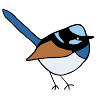
Episode illustration: Satin Bowerbird
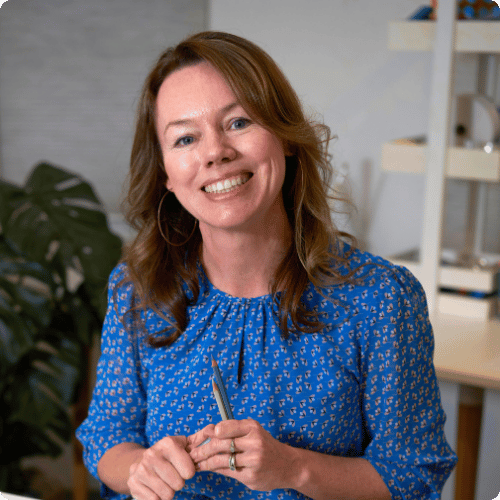
Aura Parker is a best-selling Australian children’s book author and illustrator. Aura is the creator of the Bowerbird Blues series including Bowerbird Brood, Bowerbird Bloom and Bowerbird Brave. Aura is passionate about children’s literacy, the environment and encouraging children to be creative and brave. She works from her studio in Sydney and illustrates her picture books in watercolour, pen and coloured pencil using traditional and digital mediums.
-
Kirsty Costa [00:00:00]
This episode was recorded on Darkinjung Country on the Central Coast of New South Wales. Darkinjung Country stretches along coastal landscapes, forests and waterways from the Pacific Ocean towards the inland mountains and valleys. I'd like to acknowledge the Darkinjung people and their continuing connection to Country and pay my respects to Elders past and present, and to their families.
Welcome to Weekend Birder podcast. I'm your bird-noticing buddy, Kirsty Costa.
Have you ever come across a collection of objects on the ground? Maybe some bottle tops, a few feathers, a clothes peg or two, all carefully arranged around a little structure made of sticks? If you're in the right part of Australia, you might have stumbled across the work of a bowerbird.
I'm thrilled to introduce you to Australian children's author and illustrator Aura Parker. Aura has spent years observing birds and using their behaviour as inspiration for her stories.
Today we're going to get to know Aura, discover the world of bowerbirds and find out how these remarkable birds have found their way into her children's books. So let's start with how Aura first became interested in birds.
Aura Parker [00:01:20]
Bowerbirds particularly have taken over my imagination, and bird loving has sort of built up over the years. I grew up in Balmain, and it was really when I moved to the edge of the bush in Sydney, and the back of our house is pretty much like the bird show every afternoon, and sometimes it actually starts early in the morning.
I hear the kookaburras and they pipe up with their little song. Like one of them will kind of go, oh, and then I hear the rest of them piping in, and they're so loud. Sometimes they're in the tree right outside our room, and I hear Powerful Owls at night, so they've sort of ended up weaving their way into my stories.
Yeah, really lucky to be where we are, and that they're right in our environment and they're so funny and wonderful. There's always a lot of rivalry and drama. You walk out and the kookaburras are fighting over a lizard or something, and the Brush-turkeys are chasing my dog. They actually do that. They're just wonderful and so funny.
There's a cockatoo landed, because I'm not actually at home at the moment, I'm up on the Central Coast, and a cockatoo just landed on the banister and he was just walking along. But in a way, he's sort of strutting like he could be a little character or some sort of Charlie Chaplin kind of mime with his little head poking around. So I just love watching them. They're hilarious.
Kirsty Costa [00:02:51]
So true. You don't have to go far to find birds doing something interesting. Aura has a great example of this right outside her back door.
Aura Parker [00:03:01]
There's a dead tree right off our back deck. It's only a couple of metres away so I can see it quite clearly. And it's not the most attractive tree, but to the birds it is. I think that they use it as a nesting place.
We used to have a couple of King Parrots that lived there, and they were so beautiful and elegant. I love the colour of them, so I sort of enjoyed watching them.
And lately there's been a family of Rainbow Lorikeets have moved in, and I've been hearing the sound of a little chick, like a little chirpy kind of weeping sound. And I've heard it on and off for a couple of weeks. And then one day there was this big commotion of screeching Galahs, and it turned out it wasn't a lorikeet chick at all. It was Galah chicks, and they were in the other side because there's sort of two hollows, the two branches coming up.
And the parent Galah came down and they were feeding their little chicks. They popped their heads right out, and the parent bird was sort of, it looked like a little jackhammer with its head going back and forth, putting the food into its mouth, like regurgitating the food. It was amazing.
So I love what the birds can do. They have these beautiful little moments that they bring and so much action.
So right now in Australia, there's been a plague of Bogong Moths going through. So at my house there's been hundreds of them, these dark brown moths. And I've just come to the Central Coast and I've been walking along the beach, and there's hundreds of them washed up on the shoreline. It's phenomenal.
So it's a natural occurrence, but it's very, very rare that there's migratory moths. But the birds, it must be amazing for them. It's like food is just falling from the sky. And I've noticed the birds are pretty well satisfied at the moment. I think they're pretty happy with the Bogong plague.
Kirsty Costa [00:04:56]
Birds have become part of Aura's everyday life, and they've also become characters in her books. Here is how Aura became an author and illustrator.
Aura Parker [00:05:04]
Writing and illustrating for children is something that I always wanted to do. My whole entire life I've been a writer, whether it was writing diaries or making up stories. I really love to draw, and I really love to read.
And part of the reason why I do what I do is because I love to read. And sometimes when I'm writing, it can feel like I'm reading, like you're wrapped up in the world of the story.
So over the last few years, I've been really immersed in my work, and I love what you can do with a children's book and your imagination.
It took a lot of years to get published and work on my craft and develop things. It's not something that just happened overnight. It's been a lifelong passion.
It's a real privilege to make literature for young children and meet them and see how it influences them and encourages them to write and draw. I think it's really important, you know, in the age of AI and living in this world where there's so much technology and everyone's so busy. Yeah, there's still time for these stories. So I really love what I do.
Kirsty Costa [00:06:21]
And now Aura is a bestselling children's book author and illustrator. She's written eight books so far, and one of her series is called Bowerbird Blues, which includes the books Bowerbird Brood, Bowerbird Bloom and Bowerbird Brave.
Aura Parker [00:06:39]
Bowerbird Blues was a story that kind of popped into my head, inspired by real bowerbirds and what they do and their love of blue. But it was a story that I tapped into. Like, you can have an emotional journey with that love of blue, like the love of the sky and the love of the ocean.
That book was chosen for National Simultaneous Storytime, which is where they choose one book every year, and it's read in all the preschools and libraries for storytime. So 2.3 million kids, people, will read my book at the same time on the same day.
And that really was amazing because after that I got to do the sequel, and we're up to the fourth one. It's just come out, but it sort of struck a chord with people. I think it's almost like I didn't control that. I think it sort of had its own life. It still blows my mind. It's really, really magical.
And now there's, in Book Week, there's kids who dress up as bowerbirds with the whole unit, and they were making craft bowers all around them and acting like bowerbirds, collecting things and making their own little collections. So I never imagined any of that when I wrote the book.
Kirsty Costa [00:08:03]
Aura has done an amazing job at helping so many people fall in love with bowerbirds.
Bowerbirds belong to a family of Australian and New Guinean perching songbirds called Ptilonorhynchidae. There are about 20 species worldwide and ten of those species live in Australia.
Interestingly, catbirds also belong to the bowerbird family. Like lots of other bird families, bowerbirds have been grouped together because of their shared evolutionary history, rather than being grouped together because they all look alike or they behave in exactly the same way.
The reason you might have heard about bowerbirds before is because they collect coloured items from around their environment, usually just one or two colours, placing them in a bower. This can include flowers and other items from their habitat, as well as human-made items.
Aura Parker [00:08:46]
The bowerbirds are amazing collectors. They're artists. They also love to dance. They have a courtship ritual where they will build a bower.
Now, it's not a nest. The nest is up in the tree where they'll have the egg. The bower is a different thing.
I think when a human sees the bower, often the bower doesn't look that impressive. It's sometimes a little collection of rubbish that bowerbirds are attracted to. Plastic, particularly the blue of the milk lids and the rings that go around the top of the milk bottle. They love that colour.
And to a human it probably just looks like a little collection of rubbish. But to the bowerbird it must look amazing. And they really, really care about where everything is placed and how it is arranged.
And it's on the ground and it's a structure, usually with little twigs. There's different types of bowers. There's the avenue bower and there's a maypole bower, which, you know, the avenue bower looks more like a wedding, kind of like at a wedding there's the wedding arch and there's a little sort of aisle. Reminds me of that. And the maypole bower is more like a little hut on the ground.
And some of them don't build bowers. They sort of decorate the ground. They do quite a bit of interior decorating and getting things exactly right.
In my illustrations, I was quite careful with those rings from the milk tops there in my illustrations. So I went through the book, I deleted a little part of the ring so that it wouldn't get stuck around any of my little bird characters' necks, because those rings are really dangerous to our birdlife. They can get stuck around their necks. So they actually tell us to cut the rings. Yeah, so I went and cut all the ones in my book.
There's the mating season where it's all on, and the male bowerbird will build his bower, put on his performance. He will sing, he will dance, he will mimic other birds, and all the ladybirds will pop around the neighbourhood and check out the bowers and choose the best one.
Kirsty Costa [00:10:58]
Male catbirds don't make bowers, but pretty much all the other species do. And Aura says that each bowerbird species creates a slightly different bower.
Aura Parker [00:11:07]
There's the Great Bowerbird. I've seen quite a few of their bowers. They're on the western side of Australia. They often have white things. They like the colour white, little shells, little white rocks.
And they're really fascinating because they like to build optical illusions. They will arrange their rocks on the ground in the order of size to make themselves look larger. That's called forced perspective. Amazing what they do.
And I heard some scientists went in and moved all their rocks around, and the birds didn't like it. They moved them back to the order that they wanted them to be. They're very particular about how their bower is set up.
The Regent Bowerbird, they have bright yellow and black feathers. They're quite stunning.
Kirsty Costa [00:11:57]
Aura's main focus for her children's books has been the Satin Bowerbird. This bird is found in eastern Australia, especially in forests and nearby habitats along the east coast.
Aura says that male Satin Bowerbirds are famous for their glossy colours and their bright violet eyes.
Aura Parker [00:12:15]
The male bird, he is this beautiful black, and they call him Satin because he's different in different light, like the fabric. So he's a little bit purple and a little bit blue.
And when he was younger he would have been green, and the female bird is also green, and she looks almost a little bit camouflaged, like she's sort of mottled colour. She'll blend into the undergrowth. So when he matures, he will get his black feathers.
I've filmed some over the years when they do their big dance and performance. They sort of puff themselves up really, really, you know, make themselves look bigger.
What they do, do you know what it reminds me of? Bridgerton. There's the ball season and they're all coming out to impress each other and dance and put on a show and show off their jewels, whatever they found.
Yeah, they're very social, aren't they? They are quite competitive with each other as well. They will even steal things from other bowers, but they're quite harsh birds. They're quite intense, I think, and they're quite focused on building that bower and getting the best treasure and finding exactly the right colour and exactly where it goes.
There's a real artistry in the way they behave. They're really, really interesting. They mostly have the colour blue, but they also have a little bit of yellow.
I recorded a bower once, and his favourite treasure that he was dancing with was the feather of a Sulphur-crested Cockatoo. So yellow.
And I was talking to my friend who's an art teacher about this, and I think bird vision just must be different to what we see. That colour must be amazing to them.
And she said, because I was talking about the yellow, like they've got the blue and then they've got the yellow, she said, oh, the yellow is the opposite on the colour wheel. So maybe they're seeing that differently. So it must look amazing to them. It must be this shiny beacon when they see it all together.
Kirsty Costa [00:14:29]
Yeah, Aura's correct. While humans have three types of colour-sensitive cells in our eyes, most birds have got four, and this allows them to see a wider range of colours, including wavelengths of light that humans can't see.
So does that explain why Satin Bowerbirds love collecting blue objects? Scientists have actually tested this by removing the ultraviolet, or UV, reflection from blue decorations, and the birds still preferred blue. So it's not simply about UV.
Maybe blue objects stand out against the forest floor, so collecting them could also help a male show off to potential mates. And who knows, maybe the yellow might provide an interesting contrast. Scientists aren't really quite sure.
Interestingly, Aura says that males also paint the inside of their bowers.
Aura Parker [00:15:15]
So the Satin Bowerbird uses a mixture of chewed veggies, charcoal and saliva to stick on the inner walls of his bower, to sort of stick it all together, like he's lined the inside of it, which is kind of gross.
Kirsty Costa [00:15:28]
Oh, that is kind of gross. And scientists have observed females actually nibbling at this paint. They think it might contain chemical clues that help females choose a mate, although exactly what they're detecting is still a mystery.
So the saliva paint is less about holding the bower together and more about the courtship process. Imagine if humans did the same thing. Or maybe don't imagine it.
So what we're learning is the male Satin Bowerbird builds his bower on the ground, usually creating two parallel walls of sticks that form a little avenue. Then he decorates the area with carefully collected objects placed in a very particular way.
This is his courtship display area, and it's where he performs for visiting females. And the female is the one who decides whether she's interested. If they mate, Aura says that the female bowerbird then builds a separate nest.
Aura Parker [00:16:25]
They nest up in the trees. After, when the chicks hatch, the nest that the female builds is up ten metres high and she will care for the young by herself, I believe.
When I was designing the characters for Bowerbird Brood, which is the story of the chicks hatching, it's the second book, I wanted to know what a real bowerbird chick looked like.
And I wasn't sure looking on the internet would give you the exact right answer or not. So I asked my sister-in-law. She's a wildlife carer. I ended up dedicating the book to her because I really admire the work that she does.
She works at Sydney Wildlife. She often has a house full of possums that she's caring for. She puts so much time and energy into their welfare, and occasionally she has birds.
I was excited to see what a bowerbird chick looked like. I was sure it was going to be super-duper cute and make a great character. And what she said was, oh, I wouldn't say cute.
They're really, really funny looking. They had a little beak that looks sort of frowny and they were quite dark grey and fuzzy.
So yeah, when you see my bowerbird chicks in my book, I have intentionally cutified them a little bit. I made them quite sweet and appealing for that book. So I do enjoy that artistic licence.
Kirsty Costa [00:17:57]
If you've never seen a bowerbird chick, I highly recommend a quick Google image search. Their faces really do look grumpy.
I've got some great recordings of Satin Bowerbirds chatting with each other, thanks to Marc Anderson from Wild Ambience. Their communication is so varied.
This first one is their harsh, rasping call that they sometimes use to communicate with each other when they're disturbed by humans or other animals.
The birds also do soft whistle and piping calls, like this next call that reminds me of a bomb dropping. They'll sometimes use this call during courtship as well.
Bowerbirds eat insects and they love fruit. This is what they sound like as a group when they're feeding on a Moreton Bay Fig tree.
Interestingly, bowerbirds are also accomplished mimics, and their vocal performances can include sounds copied from other birds. Kind of like being in a cover band, I guess.
Aura says that her children's books are inspired by real bowerbirds, but the characters also have their own personalities and adventures.
I'm interested to know how Aura decides which real bird behaviours to include in her stories, and where she gives herself permission to use her imagination.
Aura Parker [00:19:47]
I've probably got a little more imaginative as the series has gone on.
So, for example, I just sort of do what feels right and what feels sort of real enough. But in the latest one, which is called Bowerbird Brave, I wanted the bird to be an artist, but I didn't want to have her picking up a paintbrush and painting. That would be too much.
But I thought she could make a nature collage because you can make a little image of a bird out of leaves, like a leaf for the body and a leaf for the wing, twigs for the legs.
So I've gone into an imaginary space, which is something that a bowerbird could do with their beaks. And also a child could do that too. A child could make a little simple collage like that bowerbird.
So I'm thinking of my readers and there are compromises.
I actually put my first villain in Bowerbird Brave, which is the Powerful Owl, because they will eat possums and they're quite imposing and they're apex predators.
So I made the Powerful Owl into the villain. It just sort of seemed to fit. So she uses her voice to sort of stand up to the Powerful Owl. But that sort of fitted. Yeah, it's just sort of what fits, I think.
Kirsty Costa [00:21:06]
That makes sense to me, especially when it comes to stories. And I think it's a great example of how observing birds can lead to something very creative.
I also like the way that Aura weaves in human experiences and real-life experiences into her stories, which enable her bird characters to help children think about their world, like in her book Bowerbird Brave.
Aura Parker [00:21:26]
I think when a reader reads the book and it's a bird, it doesn't matter if it was a bird or a dog. These anthropomorphic characters could be like people.
And I think what the birds do reflects what humans do. Like I was saying, with the way they construct their bowers and it's a little bit of a competition. It's a little bit of a performance. They're just so interesting and amazing, the way they do that. And what they do is reflective of what people do and their behaviours.
So the birds have, as I've gone on, I never had any idea there would be this much content about bowerbirds because I'm now doing the fifth one and the sixth one, which has been really, really fun.
And over time, collecting more stories about bowerbirds. I've heard some great stories about bowerbirds because people have been sending me pictures of bowerbirds and telling me some of the funny things that they've seen in bowers.
I heard a story about a family. They were getting ready to go out, and they lived on a property. They knew they had a bowerbird. They were looking everywhere for Mum's keys, about to get in the car, couldn't drive anywhere, couldn't go anywhere because the keys turned out to be in the bower on the other side of the property.
There was something blue on her mum's key ring, so the bird had actually come into the house and stolen it, which is just hilarious.
So that's sort of one little story which has gone into the books, but most typically they'll come and steal the blue pegs off the clothesline.
I heard another story about a community that had lots of bowers, and the kids would walk around the neighbourhood because the birds would pinch things from the neighbouring bowerbirds. And there was this little blue toy hammer, and they'd walk around and see which bowerbird had it at a different time, because one would steal it and then another one would go and steal it back.
Kirsty Costa [00:23:33]
I find that both charming and also kind of heartbreaking, that we're putting that much blue plastic into the environment. Enough for the bowerbird to regularly claim it as part of its decorations.
I think I'm calling this emotion amused but sad. You might be feeling that way too.
Aura never expected that she'd be such a successful author-illustrator, let alone someone who's done a whole series about bowerbirds. So she has some great advice for anyone who's looking to turn their interest in birds into a creative project, like a children's book.
Aura Parker [00:24:09]
Definitely go and observe the birds, because it will make your art better.
If you wanted to illustrate children's books and make them into characters and have a distinctive style, I think it's really good to look at the photos. And then I don't draw necessarily straight from photos. You can learn a lot from doing that, but I actually prefer to draw from my imagination.
But that's if you were going to make your own distinctive character out of a bird, I think you would want to do that.
Oh yeah, just enjoying the birds, and I think a love of what they do and how they look and how they behave, it translates into making good art.
In Australia, we are in the middle of a literacy crisis. Our literacy rates amongst our students are very low. Kids aren't reading. Adults also aren't reading as much.
And I really believe that reading aloud to children encourages them to love books and love stories. So that's something that people can do.
But I wanted to mention our teacher librarians because in my work, I visit a lot of schools and encourage kids to read and write and draw. And I work with teacher librarians, and I see exactly what they do.
They help kids find the right book, but they also are experts in knowing what information is true, how to verify your sources, how to think critically, how to learn how to learn.
And unfortunately, at the moment, teacher librarians are losing their jobs and they need quite a bit of advocacy and support.
So if you're able to, if you have a primary school child, check in with your librarian and see what you can do. Find out what's going on.
Shout-out to the librarians and teacher librarians out there. We appreciate you.
Kirsty Costa [00:25:55]
Many thanks to Aura Parker for finding time in her very busy schedule to join us for a chat. And many thanks to listeners Andy D, Caitlin N, Rory K and Trevor T for suggesting her as a guest.
Please show Aura your support by following her on social media and buying her books at your local independent bookstore, or borrowing them from your library. All links are in the episode show notes.
And I'm also giving away a copy of Aura's books as part of the monthly email to the Weekend Birder community. Visit Weekend Birder to subscribe to the Monthly Letter. We do a giveaway every month.
I can't wait to introduce you to one of my Instagram buddies in the next episode. It's going to be lots of fun.
Speak to you again soon.