About this episode
One look through binoculars changed how Rosie Morley sees the world. The creator of Rosie's Bird Files shares how birdwatching has led to new adventures and unexpected discoveries, including a colourful rainforest bird hiding in the middle of Brisbane.
Birds featured: Noisy Pitta, Silvereye
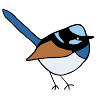
Episode illustration: Noisy Pitta
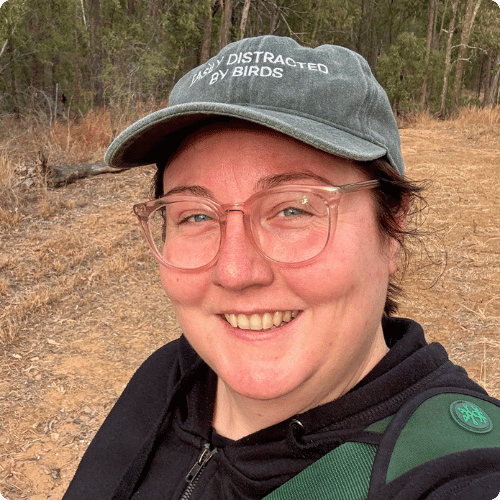
Rosie is a birder based in Brisbane. She's the creator of Rosie's Bird Files on YouTube and Instagram, where she shares her enthusiasm and excitement about birds and hopes to inspire others to feel the same way. She loves exploring birding spots around south-east Queensland with her beloved campervan and camera.
-
Kirsty Costa [00:00:00]
This episode was recorded on Turrbal Country. The Turrbal people are among the traditional custodians of Meanjin, also known as Brisbane. The Turrbal people have inhabited and cared for the Brisbane River and Moreton Bay ecosystems for tens of thousands of years.
I pay my respects to Elders past and present, and to any First Nations person listening to this podcast. Welcome to Weekend Birder. I'm Kirsty Costa, your bird-noticing buddy, and together we discover the fascinating lives of everyday birds. Have you ever tried something for the first time and then wondered how you ever managed to live without it? Rosie Morley lives in Brisbane and shares her birdwatching adventures through her social media accounts called Rosie's Bird Files. She and I have been Instagram buddies for quite a while now, and now you and I get to meet her for real. Here is how it all began for Rosie.
Rosie Morley [00:01:06]
It's a bit of a funny story, actually. I was not interested in birds, but my husband became interested in birds. He thinks it started when we started playing Wingspan, which we both love and play all the time. But I remember that it started when we were on a trip to Hong Kong, and he wanted to go to a park and see what birds were there, and I was like, what do you mean? I was like, birds, really?
And anyway, so we did that and he was checking off his birds on Merlin, I think. Anyway, so later that year I bought him some binoculars for Christmas. Classic Christmas present gift for my husband. We went on a bird walk to Oxley Creek Common as like a way of testing out the binoculars, and as soon as I lifted them up to my eyes and looked through them, I was just hooked instantly. And I think we were looking at some Tawny Frogmouths, which is probably a good way to start such beautiful birds. And then ever since then, I've just been totally hooked, totally obsessed with birds. Um, that was almost two years ago.
I pretty much instantly went out and bought myself a camera so that I could start identifying birds and figuring out what I was seeing on my walks and just, yeah, just loved it. Ever since.
Kirsty Costa [00:02:21]
I have a theory that Tawny Frogmouths have sparked a deep curiosity about everyday birds for thousands of people across Australia. If you want to know more about Oxley Creek Common, head back to episode 25 with Hugh. Rosie says that her mind is still blown when she puts binoculars up to her eyes.
Rosie Morley [00:02:40]
To be a birder, you don't need any gear at all. You can just go out and enjoy birds without any anything at all. But when you first see a bird through the binoculars and you see all the detail and the colours and its feathers, it's just something special about it.
Rosie Morley [00:02:57]
I didn't buy the camera with the intention of taking, you know, really nice photos or anything like that, but it kind of just it was a bit of a challenge to try and take some nice photos. And then I had all these photos that I was just sitting on my computer, and I started a like a WordPress blog originally because I'm a writer and an editor by training, and that just made the most sense. But I think that what I was really looking for, and what I have ended up finding through Instagram and YouTube.
When I went on my first bird walk at Oxley Creek Common, as soon as I got home, I sat down and watched a YouTube video about Oxley Creek Common by Bird Walkz Rob and I still love his YouTube videos. When I watched that video and it just made me it. It showed me all of the birds that I hadn't been able to see on my walk, and I realised how much more was out there than I had seen. And it really encouraged me to go back and try again, which I did many times. Oxley Creek Common is such a good spot. I devoured all of his YouTube videos and all the other YouTube videos that I could find and then thought there's not. I want more, there's not enough.
And so that was when I decided to start. I thought I might try YouTube. And so one day I was on a random walk at Sandy Camp Road Wetlands, which is also an amazing spot, and I was halfway through the walk and I thought, maybe I'll just try. Maybe I'll just try recording this and see how it goes. And so I recorded, I don't know, maybe ten minutes of footage or something. I'd never recorded birds before, so I'm with my camera, so I didn't know how it was going to go. And then I got home and I was like, maybe I'll just try editing this together and see how it goes. And then I was really happy with it. So maybe I'll try uploading this and see how it goes.
And then it kind of just went from there. I really, really enjoyed it and loved connecting with people about the birds that I had seen and the spots that I was going to. And yeah.
Kirsty Costa [00:05:01]
And the rest is history. What I love about Rosie's story is that she didn't start out with a big plan to become a content creator. She wasn't in it for the fame. She just kept following what interested her and built a community around her project. And I have a lot of parallels in our stories. Weekend Birder started because I wanted to create something that didn't exist yet. A podcast about birds for everyone with stories, accessible science, and different members of the bird-loving community. Being able to come on and share their passion. Rosie says that it was the same for her.
Rosie Morley [00:05:34]
I think also, I, I was finding a lot of content online about, I guess from experts, which is so amazing. It's really amazing to see all these experts talking about birds. But I also wanted to see the enthusiasm and excitement that I was feeling about birding reflected in what I was watching. And I just I felt like I wanted to contribute that. I think, you know, and show everyone what an amazing hobby and adventure birding can be.
Kirsty Costa [00:06:04]
I'll put a link to Rosie's social media and YouTube accounts in the show notes so you can find her, because there's something rather wonderful about finding people who get excited about the same things that you do. Over 150 plus episodes. You and I have heard Weekend Birder guests speak about the deeply personal experience of noticing birds. For Rosie, birdwatching has brought more than a new hobby and new friends.
Rosie Morley [00:06:27]
Birding has given me so many things, and I think that one of the more maybe obvious things is the mental health benefits. I always think of it as kind of like an active meditation. You know, you're out in nature getting fresh air. Um, I'm often on my own, so I kind of have a bit of quiet space.
I find it really helps me through stressful periods in my life, going out and doing that for my mental health. Around the time I picked up birding, I was trying to figure out ways to improve my physical health as well. This is something that I haven't really spoken about yet, but I've always been an indoors person. I've never had any outdoor hobbies. I've never really enjoyed being outside at all. I've also never enjoyed exercise, and so I've struggled to kind of keep up my fitness and physical health. And so I've always been, I've always looked for a way to exercise that I enjoyed and around the time I picked up birding.
I think it's one of the reasons I kind of loved it so much immediately, because I realised that it was a way that I could get exercise without even realizing that I was exercising at all. Well, I went from forcing myself to go on walks around the block to setting my alarm for 4:30 in the morning so that I could go out to Oxley Creek Common in and do a 5 km walk and see what birds I could find and what birds I could photograph. So it has really helped me to improve my fitness and just feel better about exercising. And I actually, I I'm really proud of this.
I went to Tasmania a few years ago before I was a birder, and I ended up at Bruny Island at The Neck, and I looked up at. Have you been to The Neck? Yeah. You know, there's those that massive staircase. And I looked up at that at the time, and I didn't even attempt it because I just didn't feel fit enough, which was kind of disappointing at the time, you know, to feel like I couldn't do that. And then I was just at Bruny Island a few weeks ago on a birding trip, and. I attribute this to the fitness that I've gained through birding, that I managed to make it up the staircase, and I was so proud of myself.
And I saw an Australasian Gannet while I was up there, so that was also excellent. It's such a brilliant way to get outside and feel healthier. Those are the main things that's given me.
But I suppose also I think and you talk about this a lot on your Instagram, which I love. It's helped me to become more of a noticer, you know, I feel like I just notice more things around me now, like even when I'm walking through the city because I work in the city, I notice all the currawongs in the city now, and the calls and where they're making their nests on the buildings, and I never noticed that before. Even going out at lunchtime, I go I go out into the Botanic Gardens now at lunchtime and do a walk and see what birds I can find.
And that was how I found the Noisy Pitta that was in the Brisbane City Botanic Gardens, which. Well, number one, I wouldn't have been out there in the, you know, looking for it before and I wouldn't have got that exercise, but also being there and seeing that bird when so many people were walking past it. And it's such an amazing bird. It was just really special.
Kirsty Costa [00:09:54]
Hang on. A Noisy Pitta in the middle of Brisbane. I love this story if you've never seen one. The Noisy Pitta is a wonderfully colourful bird with green on its back, splashes of blue on its wings and a rich red patch underneath. It's a bird of the rainforest floor, often searching through leaf litter rather than sitting up high where everyone can see it. And it's small, about the size of a kingfisher or a noisy miner.
And then there's its voice. There's a reason it's called the Noisy Pitta. Despite all those colours, you can sometimes hear it before you even spot it. Its distinctive call is often described as sounding like walk to work. Have a listen to this recording by Marc Anderson from Wild Ambience and see what you think. The Noisy Pitta is the kind of bird that could be quite easy to miss if you're rushing on your lunch break. And that's one of my favourite things about Rosie's story. Bird watching has given her a reason to get out from behind her desk, slow down and pay attention.
Rosie Morley [00:10:59]
It reminds me that I'm not just like a an office worker as well. You know, like, I sit at a desk all day and getting out there. It helps me to see the big picture again. I think
Kirsty Costa [00:11:10]
Even when you've been birdwatching for a while, there are little things that you learn that make a big difference. Rosie says that recently she's been honing her bird-noticing skills without the use of binoculars.
Rosie Morley [after 00:11:10]
I think for me, the most, the most basic tip is just get out there and start looking for birds, because once you start looking for them, or at least this was the case for me, you realize how many are there that you just never realised before? Um, but also then when you're on a walk, I think a big part of birdwatching, which I didn't expect before I started birdwatching, is not watching at all. It's listening.
If you start listening for the bird calls and all the different kinds of bird calls that are around you. That's something that I do when I'm out on a bird walk, is listen for the birds and then see if I can spot where that call is coming from, which sometimes, you know, works better than other times.
And then I think also just starting to notice, even just the birds that are around your neighbourhood where they pop up, so are they in the trees or the bushes on the ground, in the water, in the sky? Even noticing, saying to notice all the tiny little movements that might, may or may not be a bird in the bushes is really helpful. Sometimes I just feel like I'm following little noise to little noise when I'm on my bird walk. Also, I think that when I don't know about you, but when I'm on a bird walk, sometimes there are those quiet patches.
And so when you find a hive of activity, it's good to like stop and see how many different birds you can find in that patch, because then you'll work on it and it will be quiet for, you know, half an hour or whatever. So it's good to appreciate it while it's there.
Kirsty Costa [00:12:52]
That's so true. If I can, I try and stay for a while because birds are often passing through an area. If you hang out for 20 minutes, you might find that you see a range of birds without even having to move.
Over the past few years, I've been trying to improve my binoculars technique, how to use them to see up high into a tree on a sunny day, how to scan a wetland, how to follow a bird while it's flying, how to look through a bush to the other side where a bird is quietly hiding. We'll have to do another episode on binoculars, but in the meantime, there's some advice on the weekend better website and some of the advice from weekend bird guests that has stayed with me is to lock your eyes onto where the bird is. Keep your head still and bring your binoculars up to your face. That way you've got more chance of seeing it quickly.
And Rosie says that these days she's using her camera more than binoculars when birdwatching.
Rosie Morley [after 00:12:52]
But in a similar way, I think it's the same thing as with binoculars is making sure that you have you have the bird in your sight before you raise the camera up. And then I always also because I have a camera with a really good zoom, which really helps with identification.
So I always make sure I'm a little bit zoomed out before I raise the camera up, because otherwise there's just no hope of finding the bird in the, you know, in the area that you're looking at. It's looking at the shapes of the branches and then being like, okay, it's in that little fork of this branch here, or where there's a thicker trunk and then a thinner trunk of a tree. It's in the middle of those. But sometimes the most frustrating thing is when it's moved right after you raise the camera or binoculars, and then you have to do it all again. But it's part of the fun.
And sometimes I also like look through the viewfinder with one eye and the you know, not I don't know, what do you think? Not in the viewfinder with the other eyes to make sure that I'm still looking at the same spot.
Kirsty Costa [00:14:45]
I love how practical those tips are. Listen first, look for movement. Learn where birds like to hang out, and use the shapes of trees to help you find them again. And once you start looking, you might be surprised by what turns up close to home. If you find yourself in the Brisbane area, Rosie has a few favourite places that she recommends you visit.
Rosie Morley [00:15:04]
One of my favourite spots and actually it's just one of my favourite spots. Full stop. Not even for birding, is Wynnum Mangrove Boardwalk. That's a really great spot for birding because there are lots of different areas that you can go to. Lots of different habitats there. So there's the boardwalk and then there's also some kind of mudflats. There's a bird hide and a grassy area, lots of trees. There are lots of different kinds of birds. Really interesting and also just stunning, really beautiful. Just outside of Brisbane, there's Mount Glorious, which is really good for rainforest birds.
I always love going up there and seeing all the wonderful fruit doves and the birds and the catbirds and birds. It's just so beautiful. And there's a great walk that you can do as well. Through the rainforest. It's quite easy and short. North of Brisbane Tinchi Tamba Wetlands is one of my favourites and I go back to that all the time. I love the feeling that I get when I'm at Tinchi Tamba. It's like it's not that far from the city, but I just feel like I'm adventuring through the bush, which is really cool. And there's a really good bird hide there as well, which is amazing. I love the good bird hide. Yeah, those are my favourite spots, I think.
Kirsty Costa [00:16:17]
I love that Rosie has places that she returns to again and again. I bet she's getting to know the birds that live there in a whole new way. And if you're doing the same, you'll know that there's always a chance of surprise. And sometimes it's the smallest and most familiar birds that make you happiest.
Rosie Morley [after 00:16:17]
You know, you were mentioning before that feeling or when you're in a spot and all the birds are kind of passing through for that exact reason. One of my. Well, my favourite bird to see on a bird walk is the Silvereye or a flock of Silvereyes, as they usually, you know, move in flocks. I love when you're on a bird walk, and all of a sudden you start hearing these tiny little calls and I'm like, there's a flock of Silvereye was about to pass over, and they fly right over my head. And it's just such a special experience. It makes me feel like part of nature.
Kirsty Costa [00:17:12]
That's a beautiful description. I always think that Silvereyes sound like little lasers. If I hear a pew pew pew, I know it's a Silvereye. What do you think? That recording was also by Marc Anderson. Rosie loves little everyday encounters and because of these, birds have also changed how she travels. A trip now comes with another question. What might be living there that I've never seen before, including Rosie's honeymoon in New Zealand?
Rosie Morley [after 00:17:12]
I think it's really interesting that being a birder has made me appreciate travelling so much more. I always have loved travelling, but it just adds an extra layer of excitement, I think. Um, you know, because I was preparing for the New Zealand trip and obviously, you know, thinking about nice things to do with my brand new husband, but also what birds can I see? What birds am I going to find when I'm there? And then maybe planning the route according to which birds I wanted to see going on the pelagic birding trip and seeing albatrosses for the first time was just incredible.
And I think that trying to find particular birds also helped us to go to spots that we wouldn't have otherwise. Like we would never have gone out on that boat looking for albatrosses without being a birder. And that was just incredible. And we ended up staying in Arthur's Pass village overnight, which was just amazing. But it was only because I was desperate to see a kea, and we hadn't seen one in the afternoon when we passed through. And so I convinced my husband to stay overnight and look for one in the morning. And it ended up just being beautiful. And the bird was so special and it was such a great experience.
So I really think it added so much joy to the trip, which was obviously very joyful anyway, but just so much more exciting and so much more fun and so much more nature, you know, like walking around and enjoying the beautiful nature that is the New Zealand's South Island. In terms of next places, I'd love to go anywhere overseas and experience that joy again of seeing entirely new birds, because it's a different country. That would be really fun in a couple of weeks. I'm going to Girraween National Park, which is one of my favourite places on earth. It's so beautiful, but I've never been there.
I haven't been there since I started birding, so I'm really looking forward to going back with that new lens and seeing what I can find. I'm hoping for a lyrebird, so I didn't spot one when I was in Tassie, so that's my target bird. It is the very south of Queensland, so it's it's on the border with New South Wales near Stanthorpe. So there's excellent wineries around which is also helpful. Um, but it's just. Stunning. You got to go. If you're up here again at some point, it's beautiful. There's amazing walks. There's all these beautiful rock formations. Um, yeah. It's just a really special place. And Girraween, actually.
Um, in local First Nations, language means place of flowers. And in springtime, which it will be when I'm there, which I'm really excited about. It is full of wildflowers, which is so cool. I was reflecting on what I what I'm talking. You know, what I would talk about in this episode? I, I was thinking a lot about all the things that birding has given me, and I guess that's that's what I'd like to emphasize is that it's such a wonderful hobby. It's given me so much. And yeah, just a beautiful thing to do.
Kirsty Costa [00:20:56]
It really is. Rosie's journey started with a Christmas present for her husband, and now she's got a whole new hobby, made new friends, gone on new adventures, feels better in herself, and has discovered a whole new way of noticing the world. And I keep thinking about that moment in the Brisbane City Botanic Gardens when Rosie was watching a Noisy Pitta while other people walked straight past it. It makes me wonder what the rest of us might be walking past too. Many thanks to Rosie Morley for sharing her birdwatching love and stories with us. I'll put links to her social accounts in the show notes, and all you need to do is search for Rosie's Bird Files.
If you're new to noticing birds, I hope that Rosie's story encourages you to get out and see what's around you. And if you've been doing it for a while now, perhaps it's a little reminder of all the unexpected things that birds have brought into your life. Thanks for supporting Weekend Birder podcast by leaving a rating and a review on your favourite podcast app. It means the world to me. I read all of your reviews and your rating helps other people find the show. Thanks for noticing birds with us listener friend. Speak to you again soon.