152 Birds Tell Us Where We Are
About this episode
Birds can tell us where we are or remind us of where we’ve been. Lorna Pettifer chats about birds as travelling companions, the sounds of home and what Brown Treecreepers taught her about the Murray-Darling floodplains.
Birds featured: Brahminy Kite, Brown Treecreeper, Pied Currawong, Superb Lyrebird
Episode illustration: Brown Treecreeper
Resources
Bird recordings are by Marc Anderson - licenced from wildambience.com
You might also like these episodes:
16 Superb Lyrebirds - with Alex
26 Bush Birds - with Bridget
Meet the guests
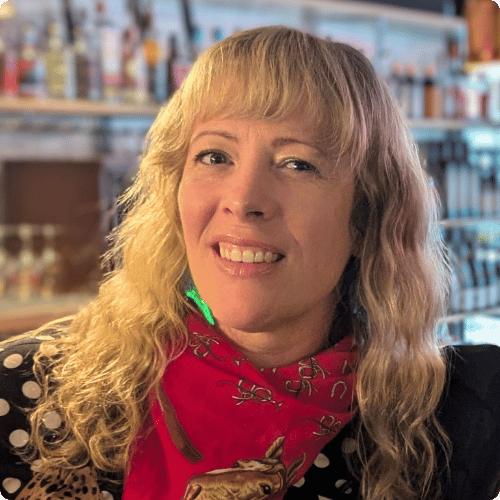
Lorna Pettifer spent her early years exploring and connecting to nature through collecting minibeasts, climbing trees, hiking and camping in the bush. She studied Zoology, Evolutionary Biology, Climate, Environmental Education and Music. Her honours thesis was on the Murray Darling Floodplains looking at how the structural complexity of ecosystems impacted bird biodiversity. She currently works in local government responding to the Climate Emergency at a community and organisational level. Her two top birds are the Rainbow Bee-eater and the Superb Lyrebird.
-
Kirsty Costa
This episode was recorded on the Country of the Wurundjeri Woi-wurrung people. I was born on Wurundjeri Country and return often to be with family, hang out with friends and hear its birds. I pay my respects to Elders past and present, and to any First Nations person listening to this.This is the Weekend Birder podcast and I'm your bird-noticing buddy, Kirsty Costa. Welcome to season five. If you're new to the podcast, here we discover the fascinating lives of everyday birds through stories and big feelings of curiosity and wonder, and we're always learning.
The first guest of every season of Weekend Birder is one of my family members or friends. I do this deliberately because I want to introduce you to the great people I get to hang out with. And also, it gives you a chance to get to know me a bit better.
The guest for this episode is Lorna Pettifer. Lorna and I have been friends for over 15 years. We met while working together and that friendship has lasted well beyond the workplace. We've supported each other through love and loss, gone on lots of bushwalking and camping trips together, and eaten many, many dumpling lunches.
I'm really happy that you get to meet someone who is so important to me. In this episode, we're going to chat about how birds tell us where we are, both in physical place, but also where we are in the moments of our life. Lorna's love of birds started when she was very young.
Lorna Pettifer
As a child, my parents always exposed me to natural environments. We had a big backyard that was nearly an acre, so I grew up with chooks and ducks and I was the chook whisperer of the family. So I really loved animals and always thought I would do something in my life related to animals. I would look for bugs. I would try and tame our pets, carry them around under my wing and put them to sleep. So from a young age, I engaged with the creatures around me.As well as that, my parents loved camping, so we would go to a wild natural space to camp every holidays. One particular holiday was going around Australia when I was in grade three in the 80s, getting in the Cortina station wagon with the Jayco Swan on the back. Dad had his long service leave, and we drove all the way around Australia for six months and were homeschooled. And my parents are nerds. They're both scientists by background. We had a pretty interesting curriculum, so we would write in journals every day. We would go for walks at every stop, and we had nature books to look at. So we had this really big book of birds of Australia, and as we were going around and driving hundreds and thousands of k's around Australia, we would see birds and identify birds.
When you get deeper into a topic, you enjoy it more and you get more interested. So we got to know the birds of the different landscapes of Australia, going through desert landscapes, going through tropical landscapes, going through coastal landscapes. We just got to know a huge amount of birds. When you're driving, you do notice a lot of birds of prey, and one of the birds I remember when I was going around Australia that we learned was the Brahminy Kite, and the beautiful pattern under the wings that was quite identifiable. I think that's where my interest in birds first was sparked, if you like, and being out in the natural environment and connecting to nature.
Kirsty Costa
That was the call of the Brahminy Kite. I recently got to see one for the first time when I was up in Darwin on Larrakia Country. I was walking at East Point when one soared over the trees above me, and then it was quickly gone. Its distinctive chocolate-brown and white body is now etched in my mind.How about you? Is there a bird that you have a strong memory of while travelling?
Lorna says that birds have been her constant travelling companions.
Lorna Pettifer
Continuing on from my story of going around Australia, as we moved through different places, I remember really iconic birds. So going through the desert or all those heaps of spinifex, I remember huge flocks of Budgerigars, and I'd never seen Budgerigars in the wild. I grew up in the 80s where people had pet-trained budgies in their house. I remember my friends had one called Dennis that was a real character. It was really cheeky. And seeing flocks of them in the wild was beautiful, and just how they sort of swarm and flock and create patterns, that was really amazing. So they identified sort of a desert landscape.And I remember in Arnhem Land in the Northern Territory, different types of birds. I believe it's frogmouths and cassowaries more up north in the richer, hotter climate. I think Australia's got a really distinct landscape and some really distinct birds in different parts of Australia that are really unique and beautiful because of our island evolution, I guess. And I think we're really lucky to have the bird biodiversity we do. If you're interested in exploring birds, taking a trip around Australia can get your life list up pretty quick, I reckon.
Kirsty Costa
For ten years, Lorna lived and raised her family along the Merri Merri, also known as Merri Creek, in the inner north of Melbourne. She says that noticing the birds around her became part of her family's life and her feeling of home.Lorna Pettifer
The birds that would always be close by and I would hear in the morning or when I walked along the creek would be the songs of magpies and the sounds of Rainbow Lorikeets, playfully in the palm trees on the edge of the Merri. They like to congregate there. Just a common urban sound, the birds where you are close to a natural spot.Most people have a fear of magpies, and someone told me that magpies never forget. They say elephants don't forget. But I feel like in the spaces I've been, when you've been kind to magpies, I've never had any instance of them swooping and they've been like my friends in the garden. In my house that I've just moved out of, there were eight juvenile magpies that just would be in my front garden every day and nearly walk right past me and not even notice that I'm there. And I was like, I was in the way of them. Just watching them, how they socialise as groups, I just think they're really important iconic urban birds.
Another bird that makes me feel like home is - I have family in Caloundra on the Sunshine Coast, and I remember the pelicans on the beach from a young age that would come down along Bulcock Beach. There used to be these interesting twins that would save pelicans up there. There's a story around it. So I think the pelicans in Caloundra, and on the edge of the beach where there's some tropical vegetation, there will always, always be Brush-turkeys as you go up the coast. And it reminds me of Queensland and also travelling when I was younger, and the Brush-turkeys in Cape Hillsborough. Queensland's home and Melbourne's home to me, so both of those things.
And recently I've moved to Coburg North, near the beautiful Edgars Creek, and walking along the bushland there, a bird that really stands out for me and is part of my new home is the currawong and their beautiful call that's just always present in the gums. So they're the birds that make me feel at home now.
Kirsty Costa
The Pied Currawong also lets me know that I'm home on Boon Wurrung Country in the south-east of Melbourne. Some live in my neighbourhood all year round, but they seem to increase in numbers during autumn and winter. When I started noticing birds, I knew that they were there, but I guess I didn't really differentiate them from the local Little Ravens. Now their call is iconic to me. I love hearing them chat with each other across the treetops of my local area.How about you? What birds tell you that you're home?
Birds have also played a role in Lorna's career, and one bird became part of her story very early on, the Superb Lyrebird.
Lorna Pettifer
The Superb Lyrebird is one of my favourite birds in the world, alongside the Rainbow Bee-eater. After I finished my zoology honours, I did volunteer work up in the Dandenong Ranges National Park and I was part of the friends group up there, Friends of Sherbrooke Forest, and the lyrebird study groups up there as well.So I used to go walking in the morning with one of the elders of the group, who was amazing. I would walk along with her at 6:00 in the morning and she knew where every single Superb Lyrebird hung out. I was probably in my early 20s, and they were probably in their 50s or 60s, and I would follow them around all these spots through Sherbrooke Forest in the Dandenong Ranges, finding lyrebirds at different times of the year and especially around mating season when they were going on their mounds.
Superb Lyrebirds are one of my favourite birds because they're so interesting in terms of how they navigate a space, how you can track them through the forest, how they scratch the ground so you know where they've been. Of course, the uniqueness as a mimic as well. But the males aren't the only cool things about the lyrebird. We also tracked the females and understood where they hung out. When I was up there in that volunteer group, I learnt the names of all the different lyrebirds in different parts, and where the zones were and where they lived.
They had recording gear. We also recorded their calls to see if the males had distinctive frequencies, or if you could identify them just by the call. We started to look at that as well when I was doing volunteer work up there. They're just an amazing bird. They're a show pony. I love that they make their mounds where sunlight trickles through the canopy just so they can display their feathers in such a beautiful way. It would be really interesting to know more about the evolutionary biology and how many iterations it took to become this supreme, superb bird.
It's pretty amazing how they have evolved as well to not just mimic birds in the landscape, but other calls as well. You hear so many stories about what they mimic. They used to tell a story about there being a classical musician in a house in the forest, and they could mimic the sound of classical music and the sound of a violin or a flute. It's just beautiful. Being a musician as well, the musicality and their ability to do all the calls of the birds in the forest, as well as human-made sounds, is pretty amazing.
Kirsty Costa
That mechanical sound is the dancing call of the male Superb Lyrebird. When I hear that call, I think of my good friends Sherry and Scott, who got married in the Dandenong Ranges in an intimate ceremony under large gum trees. We were bonded by the sound of lyrebirds around them, and everyone who was there felt bonded together.Lorna's research took her from the top of the mountains to the floodplains of the Murray-Darling river system. Her research involved measuring how woody debris affects the biodiversity of an ecosystem, and her team wanted to find out what dead trees, logs and branches that had fallen on the forest floor meant for the survival of plants, animals, fungi and more.
Lorna Pettifer
At the time of this research, things have changed since then in how we manage environments, and this research, I would hope, contributed to some of that. What I learned at the time was really exploring how structural complexity of an environment affects biodiversity. Biodiversity is more than just the sum of its parts, because where I was was an ephemeral wetland area. It was a floodplain, a River Red Gum floodplain.At different times of the year, different birds would be in abundance. I saw that area while it was completely flooded, and to get through the site, we had to walk in waders and take a canoe. We were going through this beautiful, really deep wetland and submerged River Red Gums, and the birdlife would be completely different.
The experiment was set up to look at coarse woody debris. There were actually 34 sites with different tonnages of coarse woody debris put onto the site, from 0, 20 and 40 tonnes, 60 and 80 tonnes. So there were hectare sites that had been pre-established by my research lead, Ralph Mac Nally, and the research assistant, Greg Horrocks. I was trained in the landscape, and Greg was an amazing expert on birds. So I learnt over 100 species of birds in a really short time. It was a really interesting process.
It's like walking into this environment which had a really high bird biodiversity, where you'd go in and you just hear a cacophony of sounds, like an orchestra of birds. And then as I was trained, I could walk into that environment, over months of the year being in my honours. So we went up multiple times. I started hearing distinct sounds and what birds were present, and really amazing birds as well.
The Nankeen Night Heron, and I got to see that with its breeding plumage, which was really great. I was able to decipher different types of egrets and herons. One of my favourite birds that is really distinctive and I still know the sound to this day is the Grey Shrikethrush, Rufous Whistler, the Mistletoebird. The birds that I loved, which were the birds in the world, were the White-winged Choughs up in that space, and how they would slowly go as a group of birds through the landscape with their eerie art noise. I don't know - white noise? That was a really bad version. They would follow you, and they were really curious in a group with their red eyes.
The smaller birds that at first you couldn't see, and then you learn to see, like the thornbills, all the different types of parrots. I was remembering this and thinking about the birds that I researched at the time, because this was over 20 years ago now. There were different types of rosellas. So they had Eastern, Crimson and Yellow Rosellas, and just seeing the juveniles and the adults and how they all interacted.
But what was really distinctive was how they responded to the sites that were set up and created, and the different loads of wood. At the time, there was a lot of firewood being collected in the state forest. So this was a state forest site, and it was essentially looking at how if we keep collecting firewood from the forest, the coarse woody debris, we're going to affect the biodiversity in this space.
The study proved that actually birds did respond to the environment. I had to monitor their behaviour, and where they landed, their first land, their second land. So I had a special research coding that I had to look at in terms of where they were in the environment and how they used it. So it wasn't just about identifying the bird, it was about a sequence of stops they made once they were in the site as well.
I would spend an hour walking around these sites with coarse woody debris. If you've been up there, you would know that the Murray-Darling floodplain has lots of snakes. So essentially we made sites which were covered in wood and basically snake dens. And so I was wearing gaiters and walking around these sites, really aware that I would be likely every hour to go past a Red-bellied Black Snake, a Tiger Snake and a Brown Snake. At least one snake every time I did a transect. So I was really conscious of that. And I learned just to stop and watch and be mesmerised by snakes as well. So I was looking down for snakes, and I was looking up and around for birds at the same time.
Kirsty Costa
As part of their research, Lorna's team focused in on the Brown Treecreeper. We've actually not talked about treecreepers that much on this podcast so far.Australia actually has six species of treecreeper, and their name gives you a pretty good clue to how to spot them. These quite small birds climb up tree trunks and branches, searching the bark for insects and using their strong feet and curved claws to hold on as they go, their beaks poking into the crevices.
If you've never seen a treecreeper before, you could think of them a little bit like Australia's answer to a woodpecker. The Brown Treecreeper also spends a lot of time on the ground searching leaf litter and fallen logs for ants and other insects. It's a greyish-brown bird with fine streaks on its belly, and you'll find it in eastern and south-eastern Australia.
Brown Treecreeper presence and behaviour at the sites that Lorna was studying helped her team to make some interesting findings.
Lorna Pettifer
The data I gathered inferred that yes, the structural complexity of the environment through loads of coarse woody debris made a difference to the bird biodiversity in the river floodplains. So that was really special. And at the time as well, the Brown Treecreeper significant results were important because, not in Victoria at the time, but I believe, I think it was in New South Wales - I should fact check that, it was 20 plus years ago - they were threatened or endangered.So it was really important to find that out about a species in terms of how to rehabilitate or remediate an environment to bring these species back. So it was quite a significant result.
Kirsty Costa
The Brown Treecreeper makes me think about the first time that I visited Barmah State Forest in northern Victoria. I was there with my friend Jane and we were walking amongst the tall River Red Gum forest. It was really quiet, except for the occasional Weebill and White-winged Chough. Then a bird jumped out onto the track in front of us and gave me such a surprise. It was the first time that we'd both seen a Brown Treecreeper, and we sat and watched it jump around and search for insects.When I think of Brown Treecreepers, I think of my friend Jane. And now I'll think of Lorna too. Is there a bird that reminds you of someone that you love?
Lorna has recently been thinking a lot about our collective relationships with birds.
Lorna Pettifer
I think birds are a gateway drug to exploring nature. They're accessible. And if you don't have a scientific or zoology or ecology background, they're something that you can engage in no matter your starting point.Through my career, I've used them a lot to talk about biodiversity with small kids and adults new to exploring and caring about nature. I think you can start really simple and just getting to know, just being curious and looking in your local environment. And I know that you care a lot about this through your practice, Kirsty, but it's a mindfulness activity, going out, being in nature. And the stress we hold as humans in today's fast-paced world, it's really important to recalibrate your system. So I think looking at birds, being out in nature, is a really good practice for your wellbeing.
When my twins were really young, I used to design nature connection birthday parties for them. So when they're in kinder, the simple thing I would do was just print out four birds I find in the local environment in the Merri Creek bushland, and they had to see if they could find one of those four birds. And that was it, a three or four-year-old birthday. And I had engagement of like 15 little beings running around and able to identify common birds in the area.
Just exploring your local habitats is so important as well, to get to know your place and to feel grounded in your place as well and in gratitude yourself. I think it's really important, and the work you do through these podcasts is amazing in engaging listeners across Australia and the world. So thank you so much for letting me be part of it. Yeah, good luck for season five.
Kirsty Costa
Thanks, Lorna.What Lorna was just talking about reminds me that birds can become markers in our lives, sometimes without us even realising it. There are birds that tell us where we are in the world, birds that remind us of particular people, and birds that take us straight back to moments maybe we thought we'd forgotten.
I think that's one of the reasons that I love noticing birds. Over time, they've become part of the story of where I've been and who I've shared those places with. Perhaps after listening to this episode, you might notice which birds have become part of your story as well.
Many thanks to my amazing friend Lorna Pettifer for coming on the show. She's your friend now too. And many thanks to Marc Anderson, who continues to gift us his beautiful bird recordings. You can find more of Marc's work at Wild Ambience.
There are lots of wonderful episodes ahead this season. Together we're going to meet new people, adventure to new places and discover a lot more about the fascinating lives of everyday birds.
You can show your love for Weekend Birder by leaving a five-star rating and review on your podcast app, or by buying some Weekend Birder merch at Weekend Birder. Your support helps me keep the podcast independent and ad-free.
You can also follow along at weekend.birder on Instagram and Facebook.
Speak to you again soon.